Jesus – God’s Son – Part 1

In the beginning was the Word, and the Word was with God, and the Word was God. He was in the beginning with God. All things were made through Him, and without Him nothing was made that was made. In Him was life, and the life was the light of men. And the light shines in the darkness, and the darkness did not comprehend it. – John 1:1-5.

“In the beginning was the Word.” As he begins his Gospel, John echoes the opening words of the book of Genesis. The “Word” of God is eternal and has always been at work. It is the Word that created the universe and communicated God’s will. Now this Word has become a human being, to reveal God’s character and show God’s love. Jesus is the Word of God, who comes to share our human life.

John tells us that Jesus is the Living Word, eternal and divine. It was through Jesus that everything was created. Jesus is the source of life and light for all people everywhere.

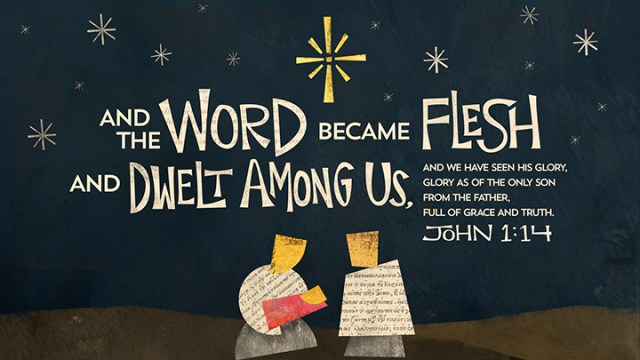
John then tells us something quite extraordinary. The eternal Word of God, the agent of creation, actually becomes a human being. He becomes flesh—that is, He takes our human nature, with all its wayward appetites and frailties. John says that Jesus made His dwelling or pitched His tent among us—just as God had camped with His people in the tent of meeting during their wilderness wanderings (John 1:14).

John and the other disciples have seen the glory of God in the life of Jesus. He revealed His glory in the signs He performed; showing He does the work of the Father, but it is also seen in His obedience to His Father and His sacrificial love for the world. Centuries before, Moses realized that God is “compassionate and gracious . . . abounding in love and faithfulness” (Exodus 34:6 NIV). Now we discover that God’s Son is “full of grace and truth” (John 1:14). God is Spirit, thus invisible, but Jesus shows Him to us perfectly.
pd john 1_14

The first part of the Gospel tells of the great signs that Jesus performs. By these signs (the other Gospels would call them miracles) Jesus shows that He is truly the Son of God. His signs, point directly to the Father.

The First Sign: Jesus Turns Water Into Wine (John 2:1-11)

It seems John wants us to think of the resurrection when he says that “on the third day” there was a wedding at Cana in Galilee. Cana is about nine miles north of Nazareth.

Eastern wedding celebrations are expected to last for several days, so it was very embarrassing to the family sponsoring the feast if the wine runs out too soon! Yet that is exactly what happens. So, Jesus’ mother tells Him of the problem, yet at first He seems to refuse her. He says that His time has not yet come. This is the first occasion that we see how Jesus pays complete attention to His Father, God. He only does what His Father tells Him to do. It stands to reason that there are times when it is right to work miracles and times when it might not be the appropriate time. One day it will be time for the greatest sign of all—for Jesus to be lifted up on the cross.

Mary (who is never called by her name in this Gospel) is not discouraged. She simply advises the servants to do as Jesus says and then more or less, leaves it in Jesus’ hands.

Jesus tells the servants to fill six huge jars with water. These are the stone jars which have been used for washing hands and feet, cups and bowls. It’s interesting to note that the number six is just short of the perfect number seven. It usually represents man and so the long years of Jewish legalism—trying to be right in the sight of God by man’s own actions—are now to give way to the joyful wine of the Good News of the gospel.

When the master of the banquet tastes what used to be the water, he discovers an excellent wine. This is a miracle of new creation, although only the servants and the disciples knew what Jesus has done. Jesus is always discreet with His miracles because, as we soon learn in John’s writings, life becomes impossible when people are clamoring for sensational signs of God’s power. The same thing holds true today. So many are looking for the “signs and wonders” and not necessarily looking for the Creator. But in this instance His glory is briefly glimpsed, and His disciples begin to truly believe in Him.

The Second Sign: Jesus Heals An Officials Son (John 4:43-54)

Back in Cana, a royal official comes from Capernaum to beg Jesus for help. His beloved son is dying. All along during this time the local people have been clamoring for Jesus to do something miraculous, but He has been reluctant to agree. Demanding signs and wonders is in fact the very opposite of having faith. People want to see before believing and the Lord tells us to believe before seeing!

To keep His help as quiet and unsensational as possible, Jesus simply tells the official to go back home. He assures him that his son will live. While he is still on the journey, the man receives the wonderful news that the boy has recovered—and it happened at the very time he had been talking to Jesus.

The healing of the official’s son is the second sign that John has chosen, through the Holy Spirit’s anointing, to record. This time it is an official and his family and staff who come to have faith in Christ.

To Be Continued

pd son of God

Unless otherwise noted, Scripture taken from the New King James Version®, NKJV © 1982 by Thomas Nelson.
Used by permission. All rights reserved.
Scripture links provided by Biblia.com
Posted in Pastor's Desk | Tagged , , , , , , , , , , , , , , , , , , , , , , , , , , , , , , , , , , , , , , , , , , , , , , , | Leave a comment

Questions On Bible Prophecy – 8

prophetic words header wp

*Pastor’s Note: We will continue, in no particular order questions posed from the excellent book by Mark Hitchcock entitled, The Complete Book of Bible Prophecy. My hope and prayer is that it will give some insight into much of the end-times prophecy the Bible speaks of and hopefully alleviates some of the fears and confusion people have about studying prophecy. The following is the next in a line of questions I present to you from his book:

Why About Setting Dates For The Rapture?

The Bible strictly prohibits date setting for the coming of Christ.

  • Matthew 24:42: “Be prepared, because you don’t know what day your Lord is coming.”
  • Matthew 24:44: “You also must be ready all the time. For the Son of Man will come when least expected.”
  • Matthew 25:13: “Stay awake and be prepared, because you do not know the day or hour of my return.”
  • Acts 1:7: “ ‘The Father sets those dates,’ he replied, ‘and they are not for you to know.’ ”
    (All Scriptures NLT)

In spite of the clear teaching of Scripture, people continue to set dates for the coming of Christ. Jesus claimed that during his earthly ministry, he did not even know the day of his coming: “No one knows the day or the hour when these things happen, not even the angels in heaven or the Son himself. Only the Father knows” (Matthew 24:36).

Anyone who claims to know the specific time of Christ’s coming is claiming that he knows something that the Father didn’t even tell the Son while he was on earth. This is the height of arrogance and folly.


Mr. Hitchcock’s teachings are informative and enlightening as well as inspirational and any book you can get for yourself from his writings will most definitely be well-worth it. I hope you are blessed AND informed and some of these questions and answers will give you a greater strength to walk in confidence and faith in the Lord Jesus Christ.

Bible prophecy ALWAYS points to God and His plans for this world that He created through Christ Jesus. Therefore, for true Christians, it is meant to be a comfort that God continues as always to have everything under control despite what it might appear to the average person.

prophetic words footer

Mark Hitchcock, The Complete Book of Bible Prophecy (Tyndale House Publishers, Inc., 1999)
Posted in Prophetic Words | Tagged , , , , , , , , , , , , , , , , , , , , , , , , , , , , , , , , , , , , , , , , , , , , , , , , | Leave a comment

The Biting Edge of Sarcasm

life in focus header

NOTHING takes the heart out of a person quite like biting sarcasm from an authority figure. It can be hard enough just to get up the courage to approach a powerful leader, but if that figure responds with derision, even the bravest can lose hope.

Pharaoh used sarcasm with Moses and Aaron when they came to warn of the plague of locusts (Exodus 10:10). There is no clear indication that they were disheartened by the ruler’s taunts. But given Moses’ fears before returning to Egypt, perhaps he and his brother were not exactly rejoicing as they went out from Pharaoh’s presence.

There are at least three ways to handle biting sarcasm, especially when it is directed against one’s faith:

  1. Know who God is and why He has sent you. If people do not have much confidence in God to begin with, it won’t take much to knock their faith out of them. Likewise, if they do not know God’s purpose, it will be easy for a sarcastic comment to make them forget why they are doing what they are doing.
  2. Know yourself—your strengths and your weaknesses. What is the worst that someone could say to you, or about you? To what sort of comments would you be most sensitive and vulnerable?
  3. Know your enemy. What does your opponent stand to gain by turning you aside, or to lose if you prevail? Most importantly, do you know who your real enemy is?

However Moses and Aaron were affected by Pharaoh’s words here, they nevertheless did not let it take the heart of what God had called them to do.

life in focus footer

Courtesy of Nelson’s New Illustrated Bible Commentary
Scripture links provided by Biblia.com
Posted in Life In Focus | Tagged , , , , , , , , , , , , , , , , , , , , , , , , , , , , , , , , , , , , , , | Leave a comment

Centuries of Meditations – First Century 21-22

devotionals header

21

By the very right of your senses you enjoy the World. Is not the beauty of the Hemisphere present to your eye? Doth not the glory of the Sun pay tribute to your sight? Is not the vision of the World an amiable thing? Do not the stars shed influences to perfect the Air? Is not that a marvelous body to breathe in? To visit the lungs: repair the spirits, revive the senses, cool the blood, fill the empty spaces between the Earth and Heavens; and yet give liberty to all objects? Prize these first: and you shall enjoy the residue: Glory, Dominion, Power, Wisdom, Honor, Angels, Souls, Kingdoms, Ages. Be faithful in a little, and you shall be master over much. If you be not faithful in esteeming these; who shall put into your hands the true Treasures? If you be negligent in prizing these, you will be negligent in prizing all. For there is a disease in him who despiseth present mercies, which till it be cured, he can never be happy. He esteemeth nothing that he hath, but is ever gaping after more: which when he hath he despiseth in like manner. Insatiableness is good, but not ingratitude.

22

It is of the nobility of man’s soul that he is insatiable. For he hath a Benefactor so prone to give, that He delighteth in us for asking. Do not your inclinations tell you that the World is yours? Do you not covet all? Do you not long to have it; to enjoy it; to overcome it? To what end do men gather riches, but to multiply more? Do they not like Pyrrhus, the King of Epire, add house to house and lands to lands, that they may get it all? It is storied of that prince, that having conceived a purpose to invade Italy, he sent for Cineas, a philosopher and the King’s friend: to whom he communicated his design, and desired his counsel. Cineas asked him to what purpose he invaded Italy? He said, to conquer it. And what will you do when you have conquered it? Go into France, said the King, and conquer that. And what will you do when you have conquered France? Conquer Germany. And what then? said the philosopher. Conquer Spain. I perceive, said Cineas, you mean to conquer all the World. What will you do when you have conquered all? Why then said the King we will return, and enjoy ourselves at quiet in our own land. So you may now, said the philosopher, without all this ado. Yet could he not divert him till he was ruined by the Romans. Thus men get one hundred pound a year that they may get another; and having two covet eight, and there is no end of all their labour; because the desire of their Soul is insatiable. Like Alexander the Great they must have all: and when they got it all, be quiet. And may they not do all this before they begin? Nay it would be well, if they could be quiet. But if after all, they shall be like the stars, that are seated on high, but have no rest, what gain they more, but labour for their trouble? It was wittily feigned that that young man sat down and cried for more worlds to conquer. So insatiable is man that millions will not please him. They are no more than so many tennis-balls, in comparison of the Greatness and Highness of his Soul.


Thomas Traherne (1637 – September 27, 1674) was an English poet, Anglican cleric, theologian, and religious writer. Traherne’s writings frequently explore the glory of creation and what he saw as his intimate relationship with God. His writing conveys an ardent, almost childlike love of God, and is compared to similar themes in the works of later poets William Blake, Walt Whitman, and Gerard Manley Hopkins. His love for the natural world is frequently expressed in his works.

The work for which Traherne is best known today is the Centuries of Meditations, a collection of short paragraphs in which he reflects on Christian life and ministry, philosophy, happiness, desire and childhood. This was first published in 1908 after having been rediscovered in manuscript ten years earlier. Before its rediscovery this manuscript was said to have been lost for almost two hundred years and is now considered a much loved devotional.

devotionals footer 2

Thomas Traherne, Centuries of Meditations, ed. Bertram Dobell (P. J. & A. E. Dobell, 1927)
Posted in Classic Devotionals | Tagged , , , , , , , , , , , , , , , , , , , , , , , , , , , , , , , , , , , , , , , , | Leave a comment

Gideon, An Unlikely Hero – 1

great sermons header

gs - c.h. mackintosh

Charles Henry Mackintosh (October, 1820 – November 2, 1896) was a nineteenth-century Christian preacher, dispensationalist, writer of Bible commentaries, magazine editor and member of the Plymouth Brethren. In 1843, Mackintosh wrote his first tract entitled Peace with God. When he was 24, he opened a private school where he developed a special method of teaching classical languages. Mackintosh went around preaching the gospel to the poor during school holidays. He wrote to John Nelson Darby on August 31, 1853 that the Lord had “called me into larger service than ever,” and he soon concluded that he must give himself entirely to preaching, writing, and public speaking.

Gideon, An Unlikely Hero Part 1

“The people served the Lord all the days of Joshua, and all the days of the elders that outlived Joshua, who had seen all the great works of the Lord, that he did for Israel. And Joshua the son of Nun, the servant of the Lord, died, being an hundred and ten years old. . . . And also all that generation were gathered unto their fathers: and there arose another generation after them, which knew not the Lord, nor yet the works which He had done for Israel. And the children of Israel did evil in the sight of the Lord, and served Baalim. . . . And they forsook the Lord, and served Baal and Ashtaroth. And the anger of the Lord was hot against Israel, and He delivered them into the hands of spoilers that spoiled them, and He sold them into the hands of their enemies round about, so that they could not any longer stand before their enemies. Whithersoever they went out, the hand of the Lord was against them for evil, as the Lord had said, and as the Lord had sworn unto them; and they were greatly distressed” (Judges 2:7-15).

This, truly, is a gloomy and humiliating record. Joshua’s sword was sheathed. Those bright days in the which he had led Israel’s compact host to splendid victories over the kings of Canaan, were passed and gone. The moral influence of Joshua and of the elders that survived him had passed away, and the whole nation had rushed, with terrible avidity, into the gross moral evils and abominable idolatries of those nations whom they ought to have driven out from before them. In a word, the ruin was complete, so far as Israel was concerned. Like Adam, in the garden; and Noah, in the restored earth; so Israel, in the land of Canaan, utterly failed. Adam ate the forbidden fruit; Noah got drunk; and Israel bowed before the altars of Baal.

But, thank God, there is another side of the picture. There is what we may call a bright and beauteous “Nevertheless;” for God will be God, no matter what man may prove himself to be. This is an unspeakable relief and consolation to the heart. God abideth faithful. Here is faith’s stronghold, come what may. God is always to be counted upon, spite of all man’s failure and shortcoming. His goodness and faithfulness form the resource and the refuge of the soul amid the darkest scenes of human history.

This soul-sustaining truth shines out with remarkable lustre in the very passage from which we have just given such a depressing quotation. “Nevertheless, the Lord raised up judges, which delivered them out of the hand of those that spoiled them.” But mark the following words, so illustrative of the individuality of the book of Judges: “And when the Lord raised them up judges, then the Lord was with the judge, and delivered them out of the hand of their enemies all the days of the judge: for it repented the Lord because of their groanings by reason of them that oppressed them and vexed them” (Judges 2:16, 18).

In these last quoted words, we have the great root principle of the book of Judges—the divine secret of the ministry of the Baraks, the Gideons, the Jephthahs, and the Samsons, the record of whose ministry occupies so large a portion of this most interesting section of inspiration. Israel had failed—sadly, shamefully, inexcusably failed. They had forfeited all claims to the protection of Jehovah’s shield. They were justly given over into the ruthless hands of the kings of Canaan. As to all this there could be no possible question. “Nevertheless” Jehovah’s heart could feel for His poor, oppressed, and groaning Israel. True, they had proved themselves naughty and unworthy, yet His ear was ever ready to catch their very earliest groan; yea, we are even told, in Judges chapter 10, that “His soul was grieved for the misery of Israel” (Judges 10:16).

What touching words! What tenderness! What deep compassion! How such a statement lets us into the profound depths of the heart of God! The misery of His people moved the loving heart of Jehovah. The very faintest and earliest symptoms of brokenness and contrition, on the part of Israel, met with a ready and gracious response, on the part of Israel’s God. It mattered not how far they had wandered, how deeply they had sunk, or how grievously they had sinned; God was ever ready to welcome the feeblest breathings of a broken heart. The springs of divine mercy and compassion are absolutely inexhaustible. The ocean of His love is boundless and unfathomable; and hence, the very moment His people take the place of confession, He enters the place of forgiveness. He delights to pardon, according to the largeness of His heart, and according to the glory of His own Name. He finds His peculiar joy in blotting out transgressions, in healing, restoring, and blessing, in a manner worthy of Himself. This glorious truth shines in the history of Israel; it shines in the history of the Church; and it shines in the history of every individual believer.

To Be Continued

gs gideon unlikely hero

Minor adaptation of excerpts from C. H Mackintosh, Gideon and His Companions. Public Domain.
Unless otherwise noted, Scripture taken from The Holy Bible: King James Version (KJV) Public Domain.
Posted in Great Sermons From The Past | Tagged , , , , , , , , , , , , , , , , , , , , , , , , , , , , , , , , , , , , , , , , , , , | Leave a comment

Osmosis and Inertia

thought of day header

For Sunday October 30, 2022

Philippians 3:14
I press toward the goal for the prize of the upward call of God in Christ Jesus.

Consider a couple of concepts from the world of science: osmosis is the gradual transfer of fluid from one side of a membrane to the other until there are equal amounts on both sides. Inertia is the tendency of a body at rest to remain at rest, to resist acceleration, to remain in the same line of movement unless acted on by a stronger force.

In layman’s terms, osmosis is the gradual, unconscious, hit-or-miss process of absorption—like learning to speak French by living in France for twenty years. Inertia is resistance to movement or change—like preferring the status quo. Spiritually speaking, too many people try to grow spiritually through osmosis without overcoming inertia. Over a lifetime you might grow a little spiritually by attending church services on Sunday—assuming you overcome inertia by getting out of bed. But true spiritual growth only happens intentionally—by planning and moving. If you don’t make a conscious effort to grow spiritually, the likelihood is that you won’t. But you can grow spiritually if you will set goals in important areas and then achieve them.

No one grows spiritually by osmosis or without overcoming the resistance to change.

You cannot propel yourself forward by patting yourself on the back.
UNKNOWN

thought of the day footer 3

David Jeremiah, Turning Points with God: 365 Daily Devotions (Tyndale, 2014)
Unless otherwise noted, Scripture taken from the New King James Version®, NKJV © 1982 by Thomas Nelson.
Used by permission. All rights reserved.
Posted in Daily Devotional | Tagged , , , , , , , , , , , , , , , , , , , , , , , , , , , , , , , , , , , , , , , , , , , , , , | Leave a comment

Faithful To Himself

anecdotal stories

Elisha said, “As surely as the LORD Almighty lives, whom I serve, if I did not have respect for the presence of Jehoshaphat king of Judah, I would not pay any attention to you.” – 2 Kings 3:14.

My dear children, I write this to you so that you will not sin. But if anybody does sin, we have an advocate with the Father—Jesus Christ, the Righteous One. – 1 John 2:1.

Holy Spirit – He’s Always At Our Side

In 1951, Representative Richard Bolling of Missouri proposed a dam for his district but saw it defeated in committee. He brought it up before the entire House, knowing he lacked enough votes for its passage. But Bolling had befriended Sam Rayburn, Speaker of the House. When Bolling rose to present his cause, Sam Rayburn, who had sat down beside him beforehand, rose to stand at his side. Rayburn said nothing at all. He didn’t have to. By simply standing with the Representative from Missouri, Rayburn meant he wanted the bill passed—and it was.

In whom, or in what, will we have ultimate confidence? Our mortality forces the choice upon us: we need someone to stand by us and for us. We must choose carefully, for we will live with the results forever! Who is better qualified to be that one than Jesus Christ?

food for thought footer 2

Courtesy of Speaker’s Sourcebook of New Illustrations by Virgil Hurley © 1995 by Word, Incorporated.
Unless otherwise noted, Scripture taken from the Holy Bible, New International Version®, NIV © 2011 by Biblica, Inc.®
Used by permission. All rights reserved.
Posted in Anecdotal Stories | Tagged , , , , , , , , , , , , , , , , , , , , , , , , , , , , , , , | Leave a comment

Prayer For Learning Your Statutes

prayer and praise header 3
Augustus Toplady, Prayer for Sunday 10-30-2022

Teach us, O Lord, the way of your statutes, and make us keep it unto the end. Incline our hearts to your testimonies, and cause us to go in the path of your commandments, for therein is our desire. May the law of your mouth be dearer unto us than thousands of gold and silver; and let your Holy Spirit accompany your Word with saving power to our souls, through Jesus Christ our Lord.

Amen.

pp 10-30 augustus toplady

Elliot Ritzema, ed., 400 Prayers for Preachers (Lexham Press, 2012)
Posted in Prayer and Praise | Tagged , , , , , , , , , , , , , , , , , , , , , , , , , , , , , , , , , , , , , , , , , , , , | Leave a comment

Noah’s Faith, Noah’s Family – 3

expository teaching header 1

Scripture Text – Genesis 6:9 – 7:24

Methuselah was Noah’s grandfather, and Noah knew that when his grandfather died, nothing stood in the way of God’s judgment falling on a wicked world. For over a century, Noah had been warning people about the coming judgment, but only his own family had believed him and trusted the Lord.

Then Methuselah died and things began to happen. One day, Noah and his family entered their “boat” and the rains came. (“It can’t go on forever,” people said. “It’ll stop one of these days.”) But it rained for forty days and forty nights, and subterranean explosions discharged more water on the earth. Even after the rain stopped, the water continued to rise; and within five months, the whole earth was under water and everything that breathed was dead. Everything, that is, except Noah and his family, the eight people everybody laughed at.

A Faithful Man Who Worked For God – Continued

Please read Genesis 6:14-22 to get the background for this section.

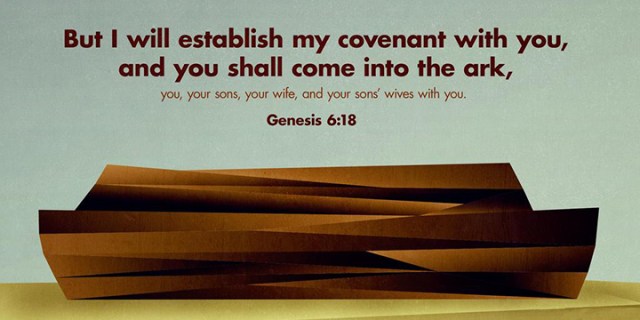
Trusting God’s covenant (Genesis 6:18). This is the first use of the word “covenant” in the Bible. The word appears often in Scripture because the covenant concept is an important part of God’s great plan of redemption. (God would explain His covenant to Noah after he left the ark; Genesis 8:20–9:17.) A covenant is an agreement that involves obligations and benefits for the parties involved. In some of the covenants, God alone is the “covenant party” and makes unconditional promises to His people. But there were also covenants that required His people to fulfill certain conditions before God could bless them.

God’s words in Genesis 6:13–21 were addressed specifically to Noah, but God also included Noah’s family in the covenant. Noah didn’t become a father until he was about 500 years old (Genesis 5:32), and he entered the ark when he was about 600 (Genesis 7:6); so his three sons were still “young” as far as pre-Flood ages were concerned. Ham was the youngest son (Genesis 9:24) and Japheth was the eldest (Genesis 10:21), and all three boys were married (Genesis 7:13). The three boys are usually identified as Noah’s sons and not by their given names (Genesis 6:18; 7:7; 8:16, 18; 9:1, 8). We are never told Noah’s wife’s name or the names of his three daughters-in-law. However, God’s covenant with Noah included all the members of the household.

The fact that God had covenanted to care for Noah and his family gave them the peace and confidence they needed as they prepared the ark and then lived in it for over a year. God is faithful to keep His promises, and as God’s covenant people, the eight believers had nothing to fear.

et God gathering animals

Gathering the animals (Genesis 6:19-22). God not only wanted humans to be preserved from destruction but also every kind of creature that would be drowned by the waters of the Flood. One of the most asked questions is how Noah was to gather such a large number of animals, birds, and creeping things? The Bible tells us that God would cause these creatures to come to Noah (Genesis 6:20; 7:8, 15) and Noah would take them into the ark. This included not only pairs of unclean animals who would be able to reproduce after the Flood, but also seven pairs of clean animals, some of whom would be used for sacrifices (Genesis 8:20; 9:3). Often times, people forget that it wasn’t just by twos, but God gave Noah specific instructions. Thanks to movies and television, many people don’t realize all that Noah had to care for. Noah and his family not only learned about the faithfulness of God, but they also saw the sovereignty of God in action.

In His sovereign power, God brought the animals to Noah and his sons and controlled them so that they did His bidding. However, this magnificent demonstration of God’s power didn’t touch the hearts of his neighbors, and though they had to have been witness to some of it they still hardened their hearts and thus perished in the Flood. The birds, beasts, and creeping things knew their Creator’s voice and obeyed Him, but people made in the image of God refused to heed God’s call. Centuries later, God would say through His servant Isaiah, “The ox knows its owner, and the donkey its master’s crib, but Israel does not know, my people do not understand.” – Isaiah 1:3.

During all of this important activity, Noah was serving the Lord and bearing witness to a sinful world. For 120 years (Genesis 6:3), God was long-suffering toward careless and rebellious sinners; but they ignored His message and not so much lost their opportunity for salvation, but in essence threw away their only hope of salvation.

“Don’t be like the horse or a mule,” God counsels (Psalm 32:9), and Noah obeyed that counsel. The horse sometimes wants to rush ahead impetuously, and the mule wants to drag its feet and stubbornly stay back; but Noah walked with God and worked for God and let God arrange the schedule.

To Be Continued

rightly dividing footer

Adaptation of excerpts from Warren W. Wiersbe, Be Basic, “Be” Commentary Series.
Unless otherwise noted, Scripture taken from The Holy Bible, English Standard Version®, ESV © 2016 by Crossway Bibles.
Used by permission. All rights reserved.
Scripture links provided by Biblia.com
Posted in Expository Teaching | Tagged , , , , , , , , , , , , , , , , , , , , , , , , , , , , , , , , , , , , , , , | Leave a comment

I Do Not Walk Alone

Based on Psalm 16:11

I DO NOT WALK ALONE

I do not walk this path alone; l hold my Father’s hand; He knows the way I need to go; my journey is His plan.

He leads me through the valley; by His love He guide’s my way. He will take me to the mountaintop; in His love I choose to stay.

My faith is in His grace alone; where He is; there I will be; to walk with Him and talk with Him for all eternity.

I will not walk this path alone; my God is here with me; and where the storms of life are found; there He will also be.

He has never; ever left my side; His Spirit comforts me; He came to live within my heart for all eternity.

pcp - psalms-16-11

© Mike Nano Armijo, June 18th, 2017. Used with permission. Mike Armijo Facebook Page
Posted in Poetic Praise | Tagged , , , , , , , , , , , , , , , , , , , , , , , , , , , , , , , , | Leave a comment

Daily Prayer & Praise 10/28/2022

prayer and praise header 4
Prayer for Friday

Dear Father in Heaven, we want to praise You together and to thank You with all our hearts for Your goodness and Your deliverance from our many needs. Accept our thanks, and help us go on our way with ever joyful hearts. Make us ready for whatever You have prepared for us, for we are Your children. Bless us in our individual lives and bless us in our community. Let Your Holy Spirit shed its rays into all places to comfort people’s hearts and to restore and strengthen their faith. May Your name be praised, glorified and honored forevermore. In the name of Your Son, our Lord, in the name of Jesus, most holy and precious Redeemer, we pray.

Amen.

prayer footer 2

Adapted from the Daily Written Prayers of Christoph Friedrich Blumhardt, 1842–1919. In Public Domain
Posted in Prayer and Praise | Tagged , , , , , , , , , , , , , , , , , , , , , , , , , , , , , , , , , , , , , , , , , , , , , , , , , , | Leave a comment

Nothing New To Dr. Parker

food for thought header 2
Dr. Joseph Parker of London said many years ago, “In the last thirty years I have seen enough dead theories and discarded hypotheses to fill a good-sized cemetery. They entered the world like an amateur band and coughed their way out like a squad of consumptive tramps.”

I wonder what Dr. Parker would say if he lived in this age? America has been invaded by troops of new prophets with new theories which remind us of that quaint verse by Rudyard Kipling:

The craft that we call modern;
The crimes that we call new;
John Bunyan had ‘em typed and filed in 1682.

anecdotal story footer

Posted in Food For Thought | Tagged , , , , , , , , , , , , , , , , , , , , , , , , , , , , , , , , , , , , , | Leave a comment

1 Timothy 6:12

thought of day header

Friday October 28, 2022

1 Timothy 6:12
Fight the good fight of faith.

To believe requires practice.

For faith is an art. The highest of all the arts in life.

And the practice consists among other things in distinguishing between what I am in Christ and what I am in myself.

I see my slovenly life, my worldly heart, my lukewarmness in prayer, my love of the world, my fear of renunciation, my lack of desire toward God and His Word. And I become restless; I become bewildered; yes, I become anxious.

This will be the case until I again agree with God that I in myself am helpless, but that I in faith, that is, in confidence in my Substitute, can stand before God as before.

It is what Christ has given me that makes me precious in the sight of God.

I am now a little more thankful. A little more confident in my Substitute. A little more certain of what I have in Him.

Thus I have had a little more practice in believing.

Fight the good fight of the faith!

Yes, here we have the decisive front in this fight. Paul says triumphantly at the close of his life: “I have kept the faith!” The very secret of the fight of faith is to keep this faith: that after I have failed or erred I give myself no peace until I again have recovered by boldness before God, in confidence in my Substitute.

This is the believer’s best defense. This is the shield of faith whereby he or she may be able to quench all the fiery darts of the evil one.

“Lord Jesus Christ,
My Savior blest,
My refuge and salvation,
I trust in Thee;
Abide in me;
Thy word shall be
My hope and consolation.”

thought of the day footer 5

O. Hallesby, God’s Word for Today: A Daily Devotional for the Whole Year, translator Clarence J. Carlsen (Augsburg, 1994)
Unless otherwise noted, Scripture taken from the New King James Version®, NKJV © 1982 by Thomas Nelson.
Used by permission. All rights reserved.
Posted in Daily Devotional | Tagged , , , , , , , , , , , , , , , , , , , , , , , , , , , , , , , , , , , , , , , , , , , , , | Leave a comment

Shout Joyfully To The Lord!

nuff-said-header-2

ns 10-28 shout joyfully

Posted in 'Nuff Said! | Tagged , , , , , , , , , , , , , , , , , , , , , , , , , , , , , , , , , , , , , , , | Leave a comment

Reflecting With God 10/28/2022

reflecting with God header
Thinking, praying, reading, studying the Bible – when we do these things, we are reflecting on the Word of God. To reflect is to contemplate and/or consider, and God wants us to deeply reflect on His Word so that we can better understand Him.

Friday Reflecting

“O Lord our God . . . we rest on You.” – 2 Chronicles 14:11.

The ship that is anchored is sensitive to every change of wind or tide, and ever turns sharply around to meet and resist the stream, from what direction soever it may flow. A ship is safest with her head to the sea and the tempest. In great storms the safety of all often depends on the skill with which the sailors can keep her head to the rolling breakers. Life and death have sometimes hung for a day and a night in the balance, whether the weary steersman could keep her head to the storm until the storm should cease. Even a single wave allowed to strike her on the broadside might send all to the bottom. But to keep the ship in the attitude of safety, there is no effort and no art equal to the anchor. As soon as the anchor feels the ground, the vessel that had been drifting broadside, is brought up, and turns to the waves a sharp prow that cleaves them in two and sends them harmless along the sides. Watch from a height any group of ships that may be lying in an open roadstead. At night when you retire they all point westward; in the morning they are all looking to the east. Each ship has infallibly felt the first veering of the wind or water, and instantly veered in the requisite direction, so that neither wind nor wave has ever been able to strike her on the broadside. Thereby hangs the safety of the ship. Ships not at anchor do not turn and face the foe. The ship that is left loose will be caught by a gust on her side, and easily thrown over. As with ships, so with souls.
~ ARNOT

reflecting with God footer 2

Unless otherwise noted, Scripture taken from the New King James Version®, NKJV © 1982 by Thomas Nelson.
Used by permission. All rights reserved.
Posted in Reflecting With God | Tagged , , , , , , , , , , , , , , , , , , , , , , , , , , , , , , , , , , , , , , , , , , , , , | Leave a comment

Noah’s Faith, Noah’s Family – 2

expository teaching header 1

Scripture Text – Genesis 6:9 – 7:24

Methuselah was Noah’s grandfather, and Noah knew that when his grandfather died, nothing stood in the way of God’s judgment falling on a wicked world. For over a century, Noah had been warning people about the coming judgment, but only his own family had believed him and trusted the Lord.

Then Methuselah died and things began to happen. One day, Noah and his family entered their “boat” and the rains came. (“It can’t go on forever,” people said. “It’ll stop one of these days.”) But it rained for forty days and forty nights, and subterranean explosions discharged more water on the earth. Even after the rain stopped, the water continued to rise; and within five months, the whole earth was under water and everything that breathed was dead. Everything, that is, except Noah and his family, the eight people everybody laughed at.

A Believing Man Who Walked With God – Continued

These are the generations of Noah. Noah was a righteous man, blameless in his generation. Noah walked with God. And Noah had three sons, Shem, Ham, and Japheth. Now the earth was corrupt in God’s sight, and the earth was filled with violence. And God saw the earth, and behold, it was corrupt, for all flesh had corrupted their way on the earth. And God said to Noah, “I have determined to make an end of all flesh, for the earth is filled with violence through them. Behold, I will destroy them with the earth.” – Genesis 6:9-13.

Noah was an obedient man (Genesis 6:22; 7:5, 16). One of the major messages in Scripture is that we must not only hear God’s Word but we must also obey it (James 1:22–25). Because Noah was obedient to the Lord, his “house” wasn’t destroyed when the storm came (Matthew 7:24–27). It wasn’t easy for Noah and his family to obey the Lord, because the rest of the population was disobeying God and rebelling against His will. According to Enoch, they were ungodly people committing ungodly deeds in ungodly ways and speaking ungodly words against the Lord God (Jude 15).

Whether it has to do with sexual abstinence, using alcohol and drugs, or joining gangs and breaking the law, we hear a great deal today about “peer pressure.” It’s the excuse for all kinds of illegal and immoral behavior, from cheating on your income tax to cheating on your spouse. But anybody who has ever developed godly character has had to fight against peer pressure, and that included Noah and his family, Abraham and his family, Moses in Egypt (Hebrew 11:24–26), and Daniel and his friends in Babylon (Daniel 1). Resisting peer pressure means not only saying a determined no to people but also a dedicated yes to the Lord (Romans 12:1–2).

et genesis 6_18

Most people know that Noah built an ark. What they may not realize is that he also built a godly character and a godly family. Had it not been for Noah’s godly family, Abraham wouldn’t have been born; and without Abraham, would there have been a Jewish nation, the Bible, and the Savior?

A Faithful Man Who Worked For God

Please read Genesis 6:14-22 to get the background for this section.

“The friendship of the LORD is for those who fear him, and he makes known to them his covenant.” – Psalm 25:14. When you walk with God, He speaks to you through His Word and tells you what you need to know and to do. Christians are more than just servants who do His will; we’re also His friends who know His plans (John 15:14–15). God’s plan involved three responsibilities for Noah and his family.

Building an ark (Genesis 6:14-17). God told Noah what his task was: to build a wooden vessel that would survive the waters of the Flood and keep Noah and his family safe. If the cubit mentioned was the standard cubit of eighteen inches, then the vessel was 450 feet long, 75 feet wide, and 45 feet high. It had three decks, one door, and a series of small windows eighteen inches high right under the roof, providing light and ventilation. The three decks were divided into compartments where the various animals would be kept and where Noah and his family would live.

This vessel was designed for flotation, not navigation. It was a huge wooden box that could float on the water and keep the contents safe and dry. Dr. Henry Morris calculated that the ark was large enough to hold the contents of over 500 livestock railroad cars, providing space for about 125,000 animals. Of course, many of the animals would be very small and not need much space; and when it came to the large animals, Noah no doubt collected younger and smaller representatives. There was plenty of room in the vessel for food for both humans and animals (Genesis 6:21), and the insects and creeping things would have no problem finding places to live on the ark.

To Be Continued

rightly dividing footer

Adaptation of excerpts from Warren W. Wiersbe, Be Basic, “Be” Commentary Series.
Unless otherwise noted, Scripture taken from The Holy Bible, English Standard Version®, ESV © 2016 by Crossway Bibles.
Used by permission. All rights reserved.
Scripture links provided by Biblia.com
Posted in Expository Teaching | Tagged , , , , , , , , , , , , , , , , , , , , , , , , , , , , , , , , , , , , , , , , , , , , , | Leave a comment

Prayer Is

PRAYER IS

Prayer is the soul’s sincere desire,
Unuttered or expressed;
The motion of a hidden fire
That trembles in the breast.

*    *    *    *    *

Prayer is the burden of a sigh,
The falling of a tear
The upward glancing of an eye,
When none but God is near.

Prayer is the simplest form of speech
That infant lips can try;
The upward glancing of an eye,
When none but God is near.

*    *    *    *    *

Prayer is the Christian’s vital breath,
The Christian’s native air,
His watchword at the gates of death;
He enters heaven with prayer.

O Thou, by Whom we come to God,
The Life, the Truth, the Way;
The path of prayer Thyself hast trod:
Lord, teach us how to pray!

*    *    *    *    *

Prayer is the contrite sinner’s voice,
Returning from his ways,
While angels in their songs rejoice
And cry, “Behold, he prays!”

The saints in prayer appear as one
In word, in deed, and mind,
While with the Father and the Son
Sweet fellowship they find.

*    *    *    *    *

No prayer is made by man alone
The Holy Spirit pleads,
And Jesus, on th’eternal throne,
For sinners intercedes.

O Thou by Whom we come to God,
The Life, the Truth, the Way,
The path of prayer Thyself hast trod:
Lord, teach us how to pray.

pcp - prayer is

James Montgomery (1771-1854)
Thanks to Sister Lora Cox (she’s now home with the Lord) for pointing me to his poetry.

Posted in Poetic Praise | Tagged , , , , , , , , , , , , , , , , , , , , , , , , , , , , , , , , | Leave a comment

Daily Prayer & Praise 10/27/2022

prayer and praise header 4
Prayer for Thursday

Lord God, we thank You for Your voice even when it is stern and we must go through hardship and suffering. Your voice speaks to us, and in Your voice we can be glad and victorious in our life on earth. Come into our lives more fully each and every day. May each of us realize that all we have gone through has been for our own good and so that we may be transformed more and more into the image of our Lord, Jesus. Be God. Sovereign and Lord over all the nations of this earth. Be a refuge for all people. Grant that the sin and distress of this terrible time may soon pass and that we may hear Your words, “Be comforted. I will come soon. All these terrors must pass by. My will is being done. My name must be honored. My kingdom and my rule are coming. So take heart and at all times look to your God and Father in Heaven.” Father, we trust and stand in Your word. Hear our cries and hear our requests, in Jesus’ name we come before You.

Amen.

prayer footer 2

Adapted from the Daily Written Prayers of Christoph Friedrich Blumhardt, 1842–1919. In Public Domain
Posted in Prayer and Praise | Tagged , , , , , , , , , , , , , , , , , , , , , , , , , , , , , , , , , , , , , , , , , , , , , , , , , , | Leave a comment

“Get Out of America” Fizzles

food for thought header 2
January had come and gone but the United States had not. Therein lies the need for some tall explaining by Moses David Berg, secluded founder of the controversial Children of God sect. Berg had ordered all his followers out of America, predicting the country would experience the judgment of God before the end of the month of January, 1974.

Leaders of the Children were quoted by newspapers in various countries as saying that Comet Kohoutek would explode and America with it.

anecdotal story footer

Posted in Food For Thought | Tagged , , , , , , , , , , , , , , , , , , , , , , , , , , , , , , , , , , , , , | Leave a comment

The Method of Missions

thought of day header

Thursday October 27, 2022

Matthew 28:19
“Go therefore and make disciples of all the nations.”

Jesus Christ did not say—‘Go and save souls’ (the salvation of souls is the supernatural work of God), but—“Go and teach,” i.e., disciple, “all nations,” and you cannot make disciples unless you are a disciple yourself. When the disciples came back from their first mission, they were filled with joy because the devils were subject to them, and Jesus said—‘Don’t rejoice in successful service; the great secret of joy is that you are rightly related to Me.’ The great essential of the missionary is that he remains true to the call of God, and realizes that his one purpose is to disciple men and women to Jesus. There is a passion for souls that does not spring from God, but from the desire to make converts to our point of view.

The challenge to the missionary does not come on the line that people are difficult to get saved, that backsliders are difficult to reclaim, that there is a ‘wadge’ of callous indifference; but along the line of his own personal relationship to Jesus Christ. “Believe ye that I am able to do this?” Our Lord puts that question steadily, it faces us in every individual case we meet. The one great challenge is—Do I know my risen Lord? Do I know the power of His indwelling Spirit? Am I wise enough in God’s sight, and foolish enough according to the world, to bank on what Jesus Christ has said; or am I abandoning the great supernatural position, which is the only call for a missionary, namely, boundless confidence in Christ Jesus? If I take up any other method, I depart altogether from the method laid down by Our Lord—“All power is given unto Me . . . therefore go ye.”

thought of the day footer 4

Oswald Chambers, My Utmost for His Highest: Selections for the Year (Oswald Chambers Publications; Marshall Pickering, 1986)
Unless otherwise noted, Scripture taken from the New King James Version®, NKJV © 1982 by Thomas Nelson.
Used by permission. All rights reserved.
Scripture links provided by Biblia.com
Posted in Daily Devotional | Tagged , , , , , , , , , , , , , , , , , , , , , , , , , , , , , , , , , , , , , , , , , , , , , | Leave a comment