Food For Thought 3/22/2023

food for thought header 2

A Good Start For Charlie Page

Charlie Page was a young man, broke, penniless and jobless. One day he stopped on the street to listen to a Salvation Army service. When the tambourine was passed around for the collection, he told the girl who held it out before him that he would like to give something but had nothing himself, even for his food. She gave him a dollar, saying, “Take this: put ten cents in the offering, and hereafter give a tenth of all you get to God. Keep this up all your life, and you’ll never be penniless again.” He did so, got a job, and began giving his tenth regularly. By and by he became a millionaire, and gave much more than a tenth, building hospitals and helping in many ways to carry on the work of the Lord.

food for thought footer

Posted in Food For Thought | Tagged , , , , , , , , , , , , , , , , , , , , , , , , , , , , , , , , , , , | Leave a comment

Hebrews 3:6

thought of day header

Wednesday March 22, 2023

Hebrews 3:6
Hold fast the confidence and the rejoicing of the hope firm to the end.

The attitude of faith is simple trust. It is Elijah saying to Ahab, “There is a sound of abundance of rain.” But then there comes usually a deeper experience in which the prayer is inwrought; it is Elijah on the mount, with his face between his knees, travailing, as it were, in birth for the promised blessing. He has believed for it—and now he must take. The first is Joash shooting the arrow out of the windows, but the second is Joash smiting on the ground and following up his faith by perseverance and victorious testing.

It is in this latter place that many of us come short. We ask much from God, and when God proceeds to give it to us we are not found equal to His expectation. We are made partakers of Christ if we hold the beginning of our confidence steadfast to the end, and trust Him through it all.

Fainting soldier of the Lord,
    Hear His sweet inspiring word,
“I have conquered all thy foes.
    I have suffered all thy woes;
Struggling soldier, trust in Me,
    I have overcome for thee.”

thought of the day footer 3

A. B. Simpson, Days of Heaven upon Earth: A Year Book of Scripture Texts and Living Truths (Christian Alliance Pub. Co., 1897)
Unless otherwise noted, Scripture taken from the New King James Version®, NKJV © 1982 by Thomas Nelson.
Used by permission. All rights reserved.
Posted in Daily Devotional | Tagged , , , , , , , , , , , , , , , , , , , , , , , , , , , , , , , , , , , , , , , | Leave a comment

Reflecting With God 3/22/2023

reflecting with God header
Thinking, praying, reading, studying the Bible – when we do these things, we are reflecting on the Word of God. To reflect is to contemplate and/or consider, and God wants us to deeply reflect on His Word so that we can better understand Him.

Wednesday Reflecting

“The fear of the LORD is the beginning of wisdom, And the knowledge of the Holy One is understanding.” – Proverbs 9:10.

He is the best grammarian who has learned to speak the truth from his heart; the best astronomer who has conversation in heaven; the best musician who has learned to sing the praise of his God; the best arithmetician who so numbers his days as to apply his heart to wisdom. He is knowing in ethics who trains up his family in the fear of the Lord; he is the best economist who is wise to salvation, prudent in giving and taking good counsel; he is the best politician and he is a good linguist, that speaks the language of Canaan.
~ SPENCER

reflecting with God footer 2

Unless otherwise noted, Scripture taken from the New King James Version®, NKJV © 1982 by Thomas Nelson.
Used by permission. All rights reserved.
Posted in Reflecting With God | Tagged , , , , , , , , , , , , , , , , , , , , , , , , , , , , , , , , , , , , , | Leave a comment

Daily Prayer & Praise 3/22/2023

prayer and praise header 4
Lord, hear our prayer:

Lord, as we come before you with thanks and praise, we thank you especially for those whose deeds opened our eyes to your truth, whose words opened our ears to your voice, whose lives opened our hearts to the power of the Spirit; for those who made Christ real; for those who made us hungry for his love and thirsty for his refreshing joy. May we, by your Holy Spirit, be channels of your life-refreshing, life-transforming grace for others. In the name of Christ, our Lord and Savior.

Amen.

prayer footer 2

Some minor adaptation on some prayers.
David Clowes, 500 Prayers For All Occasions © 2003 by David C Cook Publishing
Used by permission. All rights reserved.
Posted in Prayer and Praise | Tagged , , , , , , , , , , , , , , , , , , , , , , , , , , , , , , , , , , , , , , | Leave a comment

Going Home Again – 1

expository teaching header 1

Scripture Text – Genesis 35-36

The atmosphere in Genesis 35 is one of faith and obedience, and the emphasis is on cleansing and renewal. God is mentioned ten times in chapter 35; and He used His name El Shaddai, which means “God Almighty, the all-sufficient One.” Best of all, in chapter 35 you see God’s pilgrims making progress and arriving at the place of God’s appointment.

However, Jacob’s new step of faith didn’t prevent him from experiencing new problems and trials. During this period of renewal, Jacob buried both his father and his favorite wife; and to add burden to bereavement, his firstborn son committed a terrible sin. Being a victorious Christian doesn’t mean escaping the difficulties of life and enjoying only carefree days. Rather, it means walking with God by faith, knowing that He is with us, and trusting Him to help us for our good and His glory no matter what difficulties He permits to come our way. The maturing Christian doesn’t pray, “How can I get out of this?” but “What can I get out of this?”

Let’s discuss the new things that came into Jacob’s life.

A New Start

Please read Genesis 35:1-15 for the background to this section.

The good news of the Gospel is that we don’t have to stay the way we are. No matter how many times we’ve failed the Lord, we can go home again if we truly repent and obey. It happened to Abraham (Genesis 13:1–4), Isaac (Genesis 26:17), David (2 Samuel 12), Jonah (Jonah 3:1–3), and Peter (John 21:15–19); and now it’s happening to Jacob.

God spoke to Jacob. For several years, Jacob had lingered thirty miles away from Bethel and had paid dearly for his disobedience. But now the Lord spoke to him and told him to move to Bethel and settle down there. Jacob already knew that Bethel was God’s appointed place for him and his family (Genesis 31:13), but he had been slow to obey. “Remember therefore from where you have fallen; repent and do the first works.” – Revelation 2:5.

Jacob had built an altar on the property he had bought near Shechem and had called it “El Elohe Israel” which translated means, “God the God of Israel” (Genesis 33:20). But God wasn’t pleased with this altar because He wanted him worshiping back at Bethel. The Lord reminded Jacob of his desperate situation over twenty years ago and how He had delivered him and blessed him. At Bethel, Jacob had made some vows to the Lord; and now it was time to fulfill them.

et going home 1

Many of the problems in the Christian life and in local churches result from incomplete obedience. When we don’t continue to obey God and accomplish His will, even what we’ve done starts to die. What Jesus said to the church in Sardis, He says to us, “Be watchful, and strengthen the things which remain, that are ready to die, for I have not found your works perfect before God.” – Revelation 3:2. In essence, what Jesus said to the church in Sardis is, “your works haven’t been fulfilled or completed.”

Jacob instructed his household. It’s refreshing to see Jacob take command of the situation and boldly bear witness to what God said to him and what God did for him. These instructions applied not only to Jacob’s wives and children but also to the servants he had employed in Padan Aram. Since Jacob owned great flocks and herds, he must have needed many men to help care for them.

Jacob called for a time of cleansing for everybody, and the first thing they had to do was get rid of their idols. Rachel had stolen her father’s household idols (Genesis 31:19, 34–35), and Jacob knew that other false gods were hidden in the camp. Worshiping the gods of the pagan nations was always a temptation to the Israelites. Moses had to warn them about idolatry before they entered the land (Deuteronomy 7), and Joshua had to challenge the Israelites to abandon their idols after they had conquered the land (Joshua 24:14, 23–24). Even Samuel faced this problem in his day (1 Samuel 7:2–4), and the prophets often rebuked the nation for building the high places where they served false gods.

The second instruction was “purify yourselves, and change your garments.” Most people today are accustomed to indoor plumbing, fragrant soap, and ample wardrobes; so we forget that the ancient nomadic people in Bible lands had none of these conveniences. What we call necessities would have been considered luxuries by our ancestors.

But in Scripture, washing the body and changing clothes symbolize making a new beginning. Like dirt, sin is defiling and must be washed away (Psalm 51:2, 7; Isaiah 1:16; 2 Corinthians 7:1; 1 John 1:9). Our old garments typify the old life with its failures (Exodus 19:10; Isaiah 64:6), but God in His mercy gives us “new garments” so we can make a fresh beginning (Genesis 3:21; Isaiah 61:10; Zechariah 3:1–5; Luke 15:22; Revelation 3:18).

All the people obeyed Jacob’s commands and gave him their idols and the jewelry that were identified with pagan gods and Jacob buried all of it under “the terebinth tree which was by Shechem.”

To Be Continued

rightly dividing footer

Adapted and modified excerpts from Warren W. Wiersbe, Be Authentic, “Be” Commentary Series.
Unless otherwise noted, Scripture taken from the New King James Version®, NKJV © 1982 by Thomas Nelson.
Used by permission. All rights reserved.
Posted in Expository Teaching | Tagged , , , , , , , , , , , , , , , , , , , , , , , , , , , , , , , , , , , , , , , , , , , , , , , , | Leave a comment

Food For Thought 3/21/2023

food for thought header 2

Gusher’ Tithe

Toddie Lee Wynne, oilman of Dallas, Texas, has turned over $2,000,000 to the Texas Presbyterian Foundation. The gift represented a tithe of an estimated $20,000,000 Wynne made when he sold his petroleum company interests. Members of the Wynne family have practiced tithing for many years.

food for thought footer

Posted in Food For Thought | Tagged , , , , , , , , , , , , , , , , , , , , , , , , , , , , , , , , , , , | Leave a comment

The Glorious Gospel

thought of day header

Tuesday March 21, 2023

1 Timothy 1:15
This is a faithful saying and worthy of all acceptance, that Christ Jesus came
into the world to save sinners, of whom I am chief.

Do you see that spirit yonder—foremost among the ranks, most sweetly singing the praises of God? Do you mark it robed in white, an emblem of its purity? Do you see it as it casts its crown before the feet of Jesus, and acknowledges him the Lord of all? Hark! Do you hear it as it sings the sweetest song that ever charmed Paradise itself? Listen to it, its song is this:

“I, the chief of sinners am,
But Jesus died for me.”

“Unto him that loved me, and washed me from my sins in his blood, unto him be glory and honour, and majesty, and power, and dominion, world without end.” And who is that whose song thus emulates the seraph’s strain? The same person who a little while ago was so frightfully depraved, the self-same man! But he has been washed, he has been sanctified, he has been justified. If you ask me, then, what is meant by salvation, I tell you that it reaches all the way from that poor, desperately fallen piece of humanity, to that high-soaring spirit up yonder, praising God. That is to be saved—to have our old thoughts made into new ones; to have our old habits broken off, and to have new habits given; to have our old sins pardoned, and to have righteousness imputed; to have peace in the conscience, peace to man, and peace with God; to have the spotless robe of imputed righteousness cast about our loins, and ourselves healed and cleansed. To be saved is to be rescued from the gulf of perdition; to be raised to the throne of heaven; to be delivered from the wrath, and curse, and the thunders of an angry God, and brought to feel and taste the love, the approval, and applause of Jehovah, our Father and our Friend. And all this Christ gives to sinners.

thought of the day footer 1

C. H. Spurgeon and Terence Peter Crosby, 365 Days with Spurgeon (Volume 1) (Day One Publications, 1998)
Unless otherwise noted, Scripture taken from the New King James Version®, NKJV © 1982 by Thomas Nelson.
Used by permission. All rights reserved.
Posted in Daily Devotional | Tagged , , , , , , , , , , , , , , , , , , , , , , , , , , , , , , , , , , , , , , , | Leave a comment

Reflecting With God 3/21/2023

reflecting with God header
Thinking, praying, reading, studying the Bible – when we do these things, we are reflecting on the Word of God. To reflect is to contemplate and/or consider, and God wants us to deeply reflect on His Word so that we can better understand Him.

Tuesday Reflecting

Keep your heart with all diligence, For out of it spring the issues of life. – Proverbs 4:23.

You have seen the great reservoirs provided by our water companies, in which the water which is to supply hundreds of streets and thousands of houses is kept. Now, the heart is just the reservoir of man, and our life is allowed to flow in its proper season. That life may flow through different pipes—the mouth, the hand, the eye; but still all the issues of hand, of eye, of lip, derive their source from the great fountain and central reservoir, the heart; and hence there is no difficulty in showing the great necessity for keeping this reservoir, the heart, in a proper state and condition, since otherwise, that which flows through the pipes must be tainted and corrupt.
~ SPURGEON

reflecting with God footer 2

Unless otherwise noted, Scripture taken from the New King James Version®, NKJV © 1982 by Thomas Nelson.
Used by permission. All rights reserved.
Posted in Reflecting With God | Tagged , , , , , , , , , , , , , , , , , , , , , , , , , , , , , , , , , , , , , | Leave a comment

Daily Prayer & Praise 3/21/2023

prayer and praise header 4
Lord, hear our prayer:

Lord, you are almighty, gracious and loving. We praise you, not only that he came, but also for the way he came: born as one of us; sharing our life and our limitations of time and space; facing all the pressures and temptations that came from living in a fallen world. We praise you for the Holy Spirit at work in his birth, life and ministry. We praise you for the promise of the Spirit for all your people. Here and now we celebrate the victory of your love that will never be defeated but will conquer all that spoils your world and our lives. We will praise you here and everywhere, now and for ever.

Amen.

prayer footer 2

Some minor adaptation on some prayers.
David Clowes, 500 Prayers For All Occasions © 2003 by David C Cook Publishing
Used by permission. All rights reserved.
Posted in Prayer and Praise | Tagged , , , , , , , , , , , , , , , , , , , , , , , , , , , , , , , , , , , , , , | Leave a comment

Catching Up With the Past – 6

expository teaching header 1

Scripture Text – Genesis 32-34

As we study Jacob’s actions during this crisis time in his life, we’ll see illustrated the conflicts all of us occasionally experience between faith and fear, trusting God and scheming, asking God for help and then acting as though we don’t even know God. The lessons that Jacob learned are going to demonstrate to us that a crisis doesn’t make a man; it shows what a man is made of.

Delaying

Please read Genesis 33:17-34.31 for the background to this section.

God’s command was that Jacob return to Bethel (Genesis 31:13) and then to his home where Isaac still lived, which was Hebron (Genesis 35:27). Instead, he tarried first at Succoth and then settled near Shechem. At Succoth, the pilgrim who was supposed to live in a tent (Hebrews 11:9–16) built a house for himself and sheds for his flocks and herds. When he moved near Shechem, Jacob purchased a piece of property and became a “resident alien” in the land. He was settling down in the land.

It’s obvious that Jacob wasn’t in a hurry to obey God and return the Bethel. We commend him for erecting an altar and giving public witness of his faith in the Lord, but sacrifice is no substitute for obedience (1 Samuel 15:22). The name he gave the altar (“God, the God of Israel”) indicates that he claimed his new name “Israel,” but he certainly wasn’t living up to all that his name implied. Because he tarried in that part of the land, his granddaughter Dinah was raped and two of his sons became murderers. It was an expensive detour.

Carelessness. Was Dinah naive, rebellious, or just plain ignorant of the ways of the world? Why was it so important that she get to know the women of the land, and why didn’t her mother advise her and somebody dependable accompany her on her sightseeing trip? (Her brothers were out in the field with the flocks). For that matter, why was Jacob tarrying in this pagan neighborhood and deliberately endangering his family? He should have been at Bethel leading them closer to the Lord.

The name of the Lord isn’t mentioned once in this chapter, and the wisdom of the Lord is surely absent as well. When we disobey the Lord, we put ourselves and our loved ones in danger. Consider what happened to Abraham in Egypt (Genesis 12:10–20) and Gerar (Genesis 20), Lot in Sodom (Genesis 19), Isaac in Gerar (Genesis 26:6–16), Samson in Philistia (Judges 14; 16), Elimelech and Naomi in Moab (Ruth 1), and Peter in the high priest’s courtyard (Luke 22:54-62).

Defilement. Three times in the narrative the word “defiled” is used to describe Shechem’s wicked deed. The young prince claimed that he did it because he loved her and wanted her for his wife, but committing violent rape and keeping the girl confined in a house was a strange way to declare his love.

et the past 6

But his actions and words bore witness only to the fact that God’s people and the people of Canaan had different standards of conduct. To the Jews, sexual activity that violated the law of God brought defilement to the victim and judgment to the guilty party. In later years, the Mosaic Law with its penalties sought to protect people by declaring sexual misconduct both a sin and a crime (see Leviticus 18). The silence of Jacob when he heard the tragic news showed neither indifference nor cowardice on his part. Since his sons were in the field with the sheep and cattle and he could do nothing without their help, he was wise to wait.

Deception. When Jacob’s sons were told what had happened, they were grieved that their sister had been violated and angry at the man who did it. Both responses were normal and right. Instead of immediately declaring war, they pretended to seek peace with their neighbors and offered to do business together and even to intermarry. All that the men of Shechem had to do was agree to be circumcised. Of course, it would take more than circumcision to make Jews out of Canaanites since no covenant conditions were involved.

The Canaanites saw this policy as an opportunity to absorb Israel and gradually possess their wealth and their people, but Jacob’s sons used it as a means to weaken the men and get them ready for slaughter. Never suspecting the danger, the men of the city submitted to the surgery.

Vengeance. At a time when the males in Shechem were in too much pain to defend themselves, Simeon and Levi, two of Dinah’s full brothers, rallied some men from Jacob’s camp and attacked the Shechemites, killing Hamor and his son and all the males in the city. Then they looted the city and took captive the women and children. It was an evil thing to do, and when Jacob heard about it, he was both angry and frightened. But during his lifetime, since he had done his share of scheming and fooled his father, he couldn’t rebuke his sons without incriminating himself.

Simeon and Levi certainly went too far by slaughtering the Canaanites and looting their city in order to avenge their sister, and Jacob never forgot it (Genesis 49:5–7). By their deception and ruthless destruction, they ruined Jacob’s testimony before the people of the land. What good was it for Jacob to build an altar and worship the true God before his pagan neighbors if his children were going to act like pagans? But it’s sad to see that Jacob’s greatest concern wasn’t the vindication of purity or even his witness in the land, but rather his own safety. Had Jacob and his family been in Bethel where they belonged, this tragedy might not have occurred.

But true to His promise (Genesis 28:15), God wasn’t finished with Jacob. There were still heartaches and joys to come, but the God of Jacob would prove Himself faithful through it all.

To Be Continued in Going Home Again

rightly dividing footer

Adapted and modified excerpts from Warren W. Wiersbe, Be Authentic, “Be” Commentary Series.
Unless otherwise noted, Scripture taken from the New King James Version®, NKJV © 1982 by Thomas Nelson.
Used by permission. All rights reserved.
Posted in Expository Teaching | Tagged , , , , , , , , , , , , , , , , , , , , , , , , , , , , , , , , , , , , , , , , | Leave a comment

Food For Thought 3/20/2023

food for thought header 2

Douglas Travels Half-Way

W. L. Douglas, the shoe manufacturer, is nationally known. From his early, struggling years comes this story. He had been unemployed so long that he was down to his last dollar. Nevertheless, he put half of it—fifty cents—in the collection basket of his church. Next morning he heard of a job in a neighboring town. The railroad fare to that town was one dollar. To all appearances it would have been wiser if he had kept that fifty cents. However, with the half dollar remaining he bought a ticket and rode half-way to the desired place. He stepped from the train and began to walk to the town.

Before he had gone one block he heard of a factory right in that town where they were employing men. Within thirty minutes he had a job at a salary five dollars more a week than he would have received had he gone on to the other town.

food for thought footer

Posted in Food For Thought | Tagged , , , , , , , , , , , , , , , , , , , , , , , , , , , , , , , , , , , | Leave a comment

Truth For The Heart

thought of day header

Monday March 20, 2023

John 14:23
Jesus answered and said to him, “If anyone loves Me, he will keep My word;
and My Father will love him, and We will come to him and make Our home with him.

The doctrine of the Trinity is truth for the heart. The spirit of man alone can enter through the veil and penetrate into that Holy of Holies. “Let me seek Thee in longing,” pleaded Anselm, “let me long for Thee in seeking; let me find Thee in love, and love Thee in finding.”

Christ did not hesitate to use the plural form when speaking of Himself along with the Father and the Spirit. “We will come unto him, and make our abode with him.” Yet again He said, “I and my Father are one” (John 10:30). It is most important that we think of God as Trinity in Unity, neither confounding the Persons nor dividing the Substance. Only so may we think rightly of God and in a manner worthy of Him and of our own souls. . . .

The authors of the Athanasian Creed spelled out with great care the relation of the three Persons to each other, filling in the gaps in human thought as far as they were able while staying within the bounds of the inspirited Word. “In this Trinity,” runs the Creed, “nothing is before or after, nothing is greater or less: but all three Persons co-eternal, together and equal.”

thought of the day footer 2

Tozer on the Almighty God : A 366-Day Devotional (WingSpread, 2004)
Unless otherwise noted, Scripture taken from the New King James Version®, NKJV © 1982 by Thomas Nelson.
Used by permission. All rights reserved.
Posted in Daily Devotional | Tagged , , , , , , , , , , , , , , , , , , , , , , , , , , , , , , , , , , , , , , , | Leave a comment

Reflecting With God 3/20/2023

reflecting with God header
Thinking, praying, reading, studying the Bible – when we do these things, we are reflecting on the Word of God. To reflect is to contemplate and/or consider, and God wants us to deeply reflect on His Word so that we can better understand Him.

Monday Reflecting

Keep your heart with all diligence, For out of it spring the issues of life. – Proverbs 4:23.

The heart of man is a furnace continually burning. If thou wilt nourish it with meditations of the love of God, there will appear a bright flame of love to God and man; but if thou maintain it with thoughts of self-love, then it will be full of vile smoke, stench, and darkness.
~ CAWDRAY

reflecting with God footer 2

Unless otherwise noted, Scripture taken from the New King James Version®, NKJV © 1982 by Thomas Nelson.
Used by permission. All rights reserved.
Posted in Reflecting With God | Tagged , , , , , , , , , , , , , , , , , , , , , , , , , , , , , , , , , , , , , | Leave a comment

Daily Prayer & Praise 3/20/2023

prayer and praise header 4
Lord, hear our prayer:

Lord, we come before you again as an act of worship. Lord, you deserve to be glorified and worshipped. We come to gather up all we have said and done and thought since last we met and bring it as part of our offering of thanks and praise. We have come to seek your truth, to praise your glory and to allow the light of your love to drive the darkness out of our lives.

Amen.

prayer footer 2

Some minor adaptation on some prayers.
David Clowes, 500 Prayers For All Occasions © 2003 by David C Cook Publishing
Used by permission. All rights reserved.
Posted in Prayer and Praise | Tagged , , , , , , , , , , , , , , , , , , , , , , , , , , , , , , , , , , , , , , | Leave a comment

Pleasing God Through Obedience

pastor's desk header

Finally then, brethren, we urge and exhort in the Lord Jesus that you should abound more and more, just as you received from us how you ought to walk and to please God; for you know what commandments we gave you through the Lord Jesus. – 1 Thessalonians 4:1-2.

American culture is caught up with the grand goal of enjoying life and pleasing oneself. For example, a recent magazine article discussing vacation homes as investments led with the caption: “The No. 1 reason to build a vacation home is to enjoy yourself.” Today more than ever society is caught up in concern for health and personal well-being. Churches sometimes try to attract people to their services by advertising that what goes on at church will be enjoyable to them. Some churches advertise that contemporary music and coffee will be served throughout the service. One can even enjoy breakfast beforehand at a church cafeteria or be entertained by “sitcom-like” plays. Some of these things may not be bad in themselves, but the impression is that of the church attempting to attract people by dangling before them the kinds of pleasures that they can find outside the church. If a church does this too consistently, then what it may have to offer may be no different, ultimately, than what the world offers.

We must not fool ourselves and think that things were radically different in the first century. In Turkey (old Asia Minor) are located many of the ancient sites of the towns where the seven churches of Revelation were mentioned. At Pergamum there are ruins of an ancient Roman health spa, where, among other things, people would go to be rejuvenated emotionally because of depression. There were rooms where a patient could rest; and in the ceiling were little holes through which the priestly attendants of the spa would whisper encouraging things to help the victims recuperate psychologically.

Whether in the ancient world or today, the chief end of humanity has often been to take pleasure in this life. In contrast, the passage I gave at the start begins by affirming the opposite: humanity’s chief goal ought to be to take pleasure in pleasing God. Such passages in Scripture as this fueled the great confession, “The chief end of man is to glorify God and to enjoy Him forever.” Granted, Christians enjoy the material pleasures of this life, but only as a gift from the gracious God whom they serve (1 Timothy 4:4). This world is not meant to be an end in itself to be enjoyed.

pd pleasing God

On the basis that God has begun to work in the readers and that they are beginning to follow the command that they “ought to walk to please God,” Paul appeals to them to excel in this: “we urge and exhort in the Lord Jesus that you should abound more and more.” The meaning of the word “abound” in the original simply means “to go over and above, to go beyond.” The main point of verse 1 is that the ultimate purpose of living as a Christian is not to please oneself but increasingly to please God (Romans 8:8; 15:1–6). This develops further the earlier reference to pleasing God and walking worthily for the goal of achieving God’s glory for which they have been called as Paul wrote in chapter 2.

The Greek text of verse 1 reads “just as you received from us how it is necessary for you to walk so as to please God.” Although some translations like the NIV and the NLT leaves out “it is necessary,” most other translations attempt to express it, typically by “you must” or “you ought.” Some readers may understand this to mean that Christians should live in the way Paul had instructed, as if it is an option, and if they do not, they will not experience the full blessing they would be able to experience otherwise. Paul’s urging of them to excel, however, suggests that there is a necessity that his readers live this lifestyle and that such living is not optional for less seriously minded Christians. Indeed, this necessity is heightened by the fact that such a lifestyle is a divine commandment “through the Lord Jesus,” that God has called believers to this conduct (see verse 7), that God has given true believers the power to fulfill this commandment (1 Thessalonians 3:12–13) and that to reject living in this manner is tantamount to rejecting God (also see verse 8). Consequently, “it is necessary” that God’s true people live this way if they want to avoid the inevitable last judgment (see verse 6).

Paul says the basis for his appeal that they please God is grounded in the authority “through the Lord Jesus.” This reiterates and emphasizes the statement in verse 1 that his appeal was “in the Lord Jesus.” This appeal is none other than a renewed encouragement for them to obey the commandments given earlier by Paul. The main point then of verses 1–2 thus lies with Paul’s exhortation to please God, which should be heeded because his exhortation really comes with the authority of Christ Jesus Himself.

pastor's desk footer

Unless otherwise noted, Scripture taken from the New King James Version®, NKJV © 1982 by Thomas Nelson.
Used by permission. All rights reserved.
Posted in Pastor's Desk | Tagged , , , , , , , , , , , , , , , , , , , , , , , , , , , , , , , , , , , , | 2 Comments

Peace In a World of War – 8

prophetic words header wp

Therefore, having been justified by faith, we have peace with God through our Lord Jesus Christ. – Romans 5:1

This is the conclusion of the messages in which we discussed the peace as prophesied and developed in the Word of God.

The Cleansing – Continued

From last week: Do not confess your sin more than once to Him. Many people confess the same sin over and over again, thereby insulting God. If you have confessed it once, then believe that He keeps His word. If we confess, He forgives.

To confess the same sin again is to tell God you do not believe He forgave you the first time. Bring your sin offering in confession and then leave the rest with the Priest. Go away with thanksgiving instead of doubt. “Be anxious for nothing, but in everything by prayer and supplication, with thanksgiving, let your requests be made known to God,” then “the peace of God, which surpasses all understanding, will guard your hearts and minds through Christ Jesus.” – Philippians 4:6-7.

Thousands of Christians are defeated, sad and powerless because they let their sins bother them instead of confessing them. Look away from your failures and look to Christ, He who died to save your life and to cleanse you. Do not grieve Him longer by doubting His word. “Take your burdens to the Lord and leave them there.” Confess that sin of unbelief and doubt now. Tell Him you have grieved Him by letting the sins you have confessed continue to bother you.

Here is an illustration. Two Israelites have brought an offering for a trespass, laid their hands upon the sacrifice and delivered it to the priest. One goes away happy, the other is more gloomy than before. Both are equally safe. Both are equally forgiven, but one is happy and the other is sad. Do you know the difference? One has trusted his all to the priest. Having done all that he could do, namely, confessed his sin and brought his offering, he goes away happy. The other has done the same thing, and his offering is accepted, too, but he is sad. Do you know why? He is afraid the priest may make a slip or an error in presenting the blood and his confession will not avail. That priest in the tabernacle in the wilderness might make a mistake, but listen, listen, your Priest in heaven will never make a mistake. Trust Him. Trust Him. Kneel where you are and confess your greatest sin, which perhaps is the sin of not trusting Him.

Christ is our offering for sin. When you were saved you believed His word. That was all. Christ is also our offering for sins, which we as believers commit, and He knew we would commit them. Trust Him for your cleansing just as you did for your salvation.

If we confess our sins, He is faithful and just to forgive us our sins and to cleanse us from all unrighteousness.

prophetic words footer 2

Adapted and modified excerpts from M. R. De Haan, The Second Coming of Jesus.
Unless otherwise noted, Scripture taken from the New King James Version®, NKJV © 1982 by Thomas Nelson.
Used by permission. All rights reserved.
Posted in Prophetic Words | Tagged , , , , , , , , , , , , , , , , , , , , , , , , , , , , , , , , , , , , , , , , , | Leave a comment

Crucified, Risen, and Glorified

classic poetry header
*Pastor’s Note: A.B. Simpson was a very well respected Canadian preacher, theologian and author who lived from December 15, 1843 to October 29, 1919. My prayer is that you will be blessed and inspired by his poetry as much as I am.


CRUCIFIED, RISEN, AND GLORIFIED

“I am crucified with Christ:
Nevertheless I live;
Yet not I, but Christ liveth in me;
And the life which I now live in the flesh
I live by the faith of the Son of God,
Who loved me and gave himself for me.”
~ Galatians 2:20 ~

When Jesus died on Calvary,
I, too, was there;
’Twas in my place He stood for me,
And now accepted—even as He,
His right I share.

When Jesus rose with life divine,
I, too, was there;
His resurrection power is mine,
And, as the branches and the vine,
His life I share.

When Jesus comes some day for me,
I shall be there;
With Him and like Him I shall be,
And all His glorious majesty,
I, too, shall share.

O blessed life, so deep, so high!
Lord, keep me there;
Help me with Christ to live, to die,
And let me with Him bye and bye
His glory share.

classic poetry footer

From Songs of the Spirit: Poetry by A. B. Simpson. Public Domain
Posted in Classic Poetry | Tagged , , , , , , , , , , , , , , , , , , , , , , , , , , , , , , , , , , | Leave a comment

Classic Devotional 3/18/2023

devotionals header

Centuries of Meditations – First Century

39

Your enjoyment is never right, till you esteem every Soul so great a treasure as our Saviour doth: and that the laws of God are sweeter than the honey and honey-comb because they command you to love them all in such perfect manner. For how are they God’s treasures? Are they not the riches of His love? Is it not His goodness that maketh Him glorious to them? Can the Sun or Stars serve Him any other way, than by serving them? And how will you be the Son of God, but by having a great Soul like unto your Father’s? The Laws of God command you to live in His image: and to do so is to live in Heaven. God commandeth you to love all like Him, because He would have you to be His Son, all them to be your riches, you to be glorious before them, and all the creatures in serving them to be your treasures, while you are His delight, like Him in beauty, and the darling of His bosom.

40

Socrates was wont to say—They are most happy and nearest the Gods that needed nothing. And coming once up into the Exchange at Athens, where they that traded asked him, What will you buy; what do you lack? After he had gravely walked up into the middle, spreading forth his hands and turning about, Good Gods, saith he, who would have thought there were so many things in the world which I do not want! And so left the place under the reproach of Nature. He was wont to say: That Happiness consisted not in having many, but in needing the fewest things: for the Gods needed nothing at all, and they were most like them that least needed. We needed Heaven and Earth, our senses, such souls and such bodies, with infinite riches in the Image of God to be enjoyed: Which God of His mercy having freely prepared, they are most happy that so live in the enjoyment of those, as to need no accidental trivial things, no Splendors, Pomps, and Vanities. Socrates, perhaps, being an heathen, knew not that all things proceeded from God to man, and by man returned to God: but we that know it must need all things as God doth, that we may receive them with joy, and live in His image.


Thomas Traherne (1637 – September 27, 1674) was an English poet, Anglican cleric, theologian, and religious writer. Traherne’s writings frequently explore the glory of creation and what he saw as his intimate relationship with God. His writing conveys an ardent, almost childlike love of God, and is compared to similar themes in the works of later poets William Blake, Walt Whitman, and Gerard Manley Hopkins. His love for the natural world is frequently expressed in his works.

The work for which Traherne is best known today is the Centuries of Meditations, a collection of short paragraphs in which he reflects on Christian life and ministry, philosophy, happiness, desire and childhood. This was first published in 1908 after having been rediscovered in manuscript ten years earlier. Before its rediscovery this manuscript was said to have been lost for almost two hundred years and is now considered a much loved devotional.

devotionals footer 2

Thomas Traherne, Centuries of Meditations. Public Domain
Posted in Classic Devotionals | Tagged , , , , , , , , , , , , , , , , , , , , , , , , , , , , , , , , , | Leave a comment

The Necessity of Holiness – 3

great sermons header

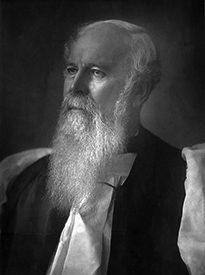
j.c. ryle wp gsp

John Charles Ryle (May 10, 1816 – June 10, 1900) was an evangelical Anglican clergyman and first Bishop of Liverpool. He was renowned for his powerful preaching and extensive tracts. John C. Ryle was a big man, physically, intellectually, scripturally and spiritually. The fact is that Ryle, though very definitely a Victorian of the Victorians, seemed to be able to leave behind him the verbosity and sentimentality of many of his contemporaries so that his writings still speak today, not only to the older generations, but to younger Christians as well.

The Necessity of Holiness – 3

Follow . . . holiness, without which no one will see the Lord. – Hebrews 12:14.

What true practical holiness is, what sort of persons are those whom God calls holy – continued.

From last week: (f) A holy man will follow after charity and brotherly kindness. . . . Alas, what condemning words are the 13th chapter of 1 Corinthians, and the Sermon on the Mount, when laid alongside the conduct of many professing Christians!

(g) A holy man will follow after a spirit of mercy and benevolence towards others. He will not stand all the day idle. He will not be content with doing no harm,—he will try to do good. He will strive to be useful in his day and generation, and to lessen the spiritual wants and misery around him, as far as he can. Such was Dorcas, “full of good works and charitable deeds, which she did,” – Acts 9:36; not merely purposed and talked about, but did. Such an one was Paul: “I will very gladly spend and be spent for your souls; though the more abundantly I love you, the less I am loved.” – 2 Corinthians 12:15.

(h) A holy man will follow after purity of heart. He will dread all filthiness and uncleanness of spirit, and seek to avoid all things that might draw him into it. He knows his own heart is like tinder, and will diligently keep clear of the sparks of temptation. Who shall dare to talk of strength when David can fall? There is many a hint to be gleaned from the ceremonial law. Under it the man who only touched a bone, or a dead body, or a grave, or a diseased person, became at once unclean in the sight of God. And these things were emblems and figures. Few Christians are ever too watchful and too particular about this point.

(i) A holy man will follow after the fear of God. I do not mean the fear of a slave, who only works because he is afraid of punishment, and would be idle if he did not dread discovery. I mean rather the fear of a child, who wishes to live and move as if he was always before his father’s face, because he loves him. What a noble example Nehemiah gives us of this! When he became Governor at Jerusalem he might have been chargeable to the Jews, and required of them money for his support. The former Governors had done so. There was none to blame him if he did. But he says, “I did not do so, because of the fear of God.” – Nehemiah 5:15.

(j) A holy man will follow after humility. He will desire, in lowliness of mind, to esteem all others better than himself. He will see more evil in his own heart than in any other in the world. He will understand something of Abraham’s feeling, when he says, “I who am but dust and ashes” (Genesis 18:27), and Jacob’s, when he says, “I am not worthy of the least of all the mercies” (Genesis 32:10), and Job’s, when he says, “Behold, I am vile” (Job 40:4), and Paul’s, when he says, “sinners, of whom I am chief” (1 Timothy 1:15). Holy Bradford, that faithful martyr of Christ, would sometimes finish his letters with these words, “A most miserable sinner, John Bradford.” Good old Mr. Grimshaw’s last words, when he lay on his death-bed, were these, “Here goes an unprofitable servant.”

(k) A holy man will follow after faithfulness in all the duties and relations in life. He will try, not merely to fill his place as well as others who take no thought for their souls, but even better, because he has higher motives, and more help than they. Those words of Paul should never be forgotten, “Whatever you do, do it heartily, as to the Lord” (Colossians 3:23), and “Not lagging in diligence, fervent in spirit, serving the Lord” (Romans 12:11). Holy persons should aim at doing everything well, and should be ashamed of allowing themselves to do anything ill if they can help it. Like Daniel, they should seek to give no “charge” (occasion) against themselves, except “concerning the law of his God” (Daniel 6:5). They should strive to be good husbands and good wives, good parents and good children, good masters and good servants, good neighbors, good friends, good subjects, good in private and good in public, good in the place of business and good by their firesides. Holiness is worth little indeed, if it does not bear this kind of fruit. The Lord Jesus puts a searching question to His people, when He asks, “What do you do more than others?” – Matthew 5:47.

To Be Continued

holiness footer

Minor adapted and modified excerpts (Scriptures and some archaic words) from:
J. C. Ryle, Holiness: Its Nature, Hindrances, Difficulties and Roots, 1889, In Public Domain.
Unless otherwise noted, Scripture taken from the New King James Version®, NKJV © 1982 by Thomas Nelson.
Used by permission. All rights reserved.

Posted in Great Sermons From The Past | Tagged , , , , , , , , , , , , , , , , , , , , , , , , , , , , , , , , , , , , , , , , , , , | Leave a comment

Idle Tales?

thought of day header

For Saturday March 18, 2023

Luke 24:11-12
And their words seemed to them like idle tales, and they did not believe them.
But Peter arose and ran to the tomb.

Luke is considered a historian of first rank, whose verifiable accuracy put him head and shoulders above his secular peers. His two works, the Gospel of Luke and the Acts of the Apostles, boldly assert that Jesus of Nazareth rose physically from the tomb on Easter.

Luke didn’t expect us to take this on “blind faith.” He opened his Gospel by telling us that he had carefully investigated everything from the beginning so we’d know the certainty of the things we’ve been taught (Luke 1:3–4). And he began his book of Acts by telling us that after the Resurrection, Jesus showed Himself alive “by many infallible proofs” (Acts 1:3).

Scientist Henry Morris said, “The bodily resurrection of Jesus Christ from the dead is the crowning proof of Christianity. If the resurrection did not take place, then Christianity is a false religion. If it did take place, then Christ is God and the Christian faith is absolute truth.”

Our faith is warm and personal, but it is based on cold, hard facts—not on idle tales.

For a very simple reason: I am not able to explain away an event
in history—the resurrection of Jesus Christ.

JOSH McDOWELL
WHEN ASKED WHY HE COULD NOT REFUTE CHRISTIANITY

thought of the day footer 6

David Jeremiah, Turning Points with God: 365 Daily Devotions (Tyndale, 2014)
Unless otherwise noted, Scripture taken from the New King James Version®, NKJV © 1982 by Thomas Nelson.
Used by permission. All rights reserved.
Posted in Daily Devotional | Tagged , , , , , , , , , , , , , , , , , , , , , , , , , , , , , , , , , , , , , , , , , , | Leave a comment