Reflecting With God 2/28/2023

reflecting with God header
Thinking, praying, reading, studying the Bible – when we do these things, we are reflecting on the Word of God. To reflect is to contemplate and/or consider, and God wants us to deeply reflect on His Word so that we can better understand Him.

Tuesday Reflecting

Such knowledge is too wonderful for me. – Psalm 139:6.

There is a tradition that the descendants of Seth lived on the summit of so lofty a mountain as to be able to hear and join in the song of the heavenly host.

The Bible is that mountain. Its peak pierces beyond the clouds into the sublimest elevations and atmospheres. Where the Word of God ends, Heaven begins. The conceptions of things, human and divine, found herein surpass in grandeur and magnificence all the dreams of the ages and of the sages.
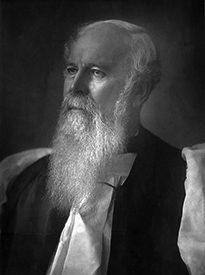
~ A. T. PIERSON

reflecting with God footer 2

Unless otherwise noted, Scripture taken from the New King James Version®, NKJV © 1982 by Thomas Nelson.
Used by permission. All rights reserved.
Posted in Reflecting With God | Tagged , , , , , , , , , , , , , , , , , , , , , , , , , , , , , , , , , , , , , | Leave a comment

Daily Prayer & Praise 2/28/2023

prayer and praise header 4
Lord, hear our prayer:

Father, we praise you that whoever we are and wherever we go you are there. We have discovered that there is simply nowhere we can go where you will not be present. We cannot hide, we cannot run, we cannot even be there before you! You are always ahead of us, preparing the way. You are there waiting with arms of love and mercy to hold us and to welcome us; to heal us and to hold us. Lord, you are ever near, ever approachable. In the midst of our anxiety and fear you are always understanding, coming into our turmoil, our doubts, our weakness and despair, and you come with peace. For that we praise you in Jesus’ name.

Amen.

prayer footer 2

Some minor adaptation on some prayers.
David Clowes, 500 Prayers For All Occasions © 2003 by David C Cook Publishing
Used by permission. All rights reserved.
Posted in Prayer and Praise | Tagged , , , , , , , , , , , , , , , , , , , , , , , , , , , , , , , , , , , , , , | Leave a comment

Psalm 119 – Ayin

expository teaching header 1

Scripture Text – Psalm 119

The emphasis in this the longest psalm, and the basic theme, is on the vital ministry and practical use of the Word of God in the inner spiritual life of God’s children. It describes how the Word enables us to grow in holiness and handle the persecutions and pressures that always accompany an obedient walk of faith.

The Word of God performs many wonderful ministries in the life of the devoted believer. If we delight in His Word, learn it, treasure it within, and obey what it says, the Lord will work in us and through us to accomplish great things for His glory! Circumstances may change, but God and His Word remain the same.

Ayin – Blessed Assurance

Please read Psalm 119:121-128 for the background to this section.

For the first time, the word “oppressors” and “oppress” appear in this psalm. The word describes the abuse of power and authority, taking advantage of the underprivileged by either violence or deceit. The word includes the ideas of accusation and slander. The Jews were commanded not to oppress one another (Leviticus 25:14, 17; Deuteronomy 24:5–22), and this included the strangers in the land (Exodus 22:2; 23:9). Often, God’s people suffer oppression while the guilty go free. When that happens, we need to remember the Lord and what He does for us.

The Lord is the Rewarder. The psalmist was not boasting but affirming to the Lord that he was not guilty of anything that deserved punishment. He was a man of integrity who had a clear conscience; he had treated others justly and had practiced God’s holy laws diligently. That in itself was a blessing, but God’s people long to see justice reigning on the earth. When God rewards His people, it is a witness to sinners that their day of judgment is certain (Psalm 58:10–11). “Therefore do not cast away your confidence, which has great reward.” – Hebrews 10:35, (see also Isaiah 40:10; Revelation 22:12).

The Lord is our Surety. The King James Version and New American Standard Bible are superior here to the word “ensure” used in the New International Version. A person became surety when he or she pledged to pay another person’s debt or fulfill a promise. When Jacob refused to allow Benjamin to go to Egypt for food with his brothers, it was Judah who willingly became surety for his youngest brother (Genesis 43:1–10; 44:18–34). Judah’s passionate speech before his brother in Egypt assured Joseph that Judah had truly experienced a change of heart and that it was safe to reveal his identity to the men.

et 119-16

To become surety for a friend’s debts is forbidden in Scripture, lest you end up with a burden greater than you can handle (Proverbs 11:15; 17:18; 22:26–27). But the Son of God became surety for those who have trusted Him! (Hebrews 7:22). No matter how many promises we might make to the Lord, we can never fulfill them. But in His death on the cross, Jesus has paid the debt for us, and in His ministry of intercession at the throne in heaven, He is our living Surety. As long as He lives, our salvation is secure, and He lives “according to the power of an endless life.” – Hebrews 7:16. So, no matter what people do to us and no matter how we feel, our Surety is secure and we remain in the family of God. Jesus has taken the responsibility for our salvation, and He will never fail.

The Lord is our Master. Whenever people attack us, they also attack the Lord, for we belong to Him. When Saul of Tarsus persecuted Christians on earth, He also persecuted their Lord in heaven (Acts 9:1–5). God cares for His servants. He does not always prevent us from being oppressed, but He always has a good reason for permitting it to happen. He is a loving Master who teaches us His will and gives us the discernment we need to handle the problems of life. Even more, He gives us promises that we can claim and thereby find the strength and wisdom we need. God’s servants do not live by explanations; they live by promises.

The Lord is the Final Judge. In our impatience, we sometimes want God to work immediately and set everything right, but His ways and times are not always the same as ours. Faith and patience go together (Hebrews 6:12), and God’s delays are not God’s denials. The day will come when the truth will be revealed and sin will be judged; meanwhile, instead of complaining about what we have paid or lost, let us rejoice in the wealth that we have in God’s Word, wealth that can never be taken from us. All of God’s precepts concerning all things are always right, so we can depend on the Scriptures and have the guidance that we need. If we love the Word, we will hate the wrong paths of sinners and stay away from them. We do not even put one foot on the path of the wicked! (Proverbs 1:13).

To Be Continued

rightly dividing footer

Adapted and modified excerpts from Warren W. Wiersbe, Be Exultant, “Be” Commentary Series.
Unless otherwise noted, Scripture taken from the New King James Version®, NKJV © 1982 by Thomas Nelson.
Used by permission. All rights reserved.
Posted in Expository Teaching | Tagged , , , , , , , , , , , , , , , , , , , , , , , , , , , , , , , , , , , , , , , , , , , | Leave a comment

Food For Thought 2/27/2023

food for thought header 2

God Made . . .

God made the sun—it gives.
God made the moon—it gives.
God made the stars—they give.
God made the air—it gives.
God made the clouds—they give.
God made the earth—it gives.
God made the sea—it gives.
God made the trees—they give.
God made the flowers—they give.
God made the fowls—they give.
God made the beasts—they give.
God made the plants—they give.
God made man—he . . .

food for thought footer

Posted in Food For Thought | Tagged , , , , , , , , , , , , , , , , , , , , , , , , , , , , , , , , , , , | Leave a comment

The Common Man and The Common God

thought of day header

Monday February 27, 2023

Psalm 145:5-6
I will meditate on the glorious splendor of Your majesty, And on Your wondrous works.
Men shall speak of the might of Your awesome acts, And I will declare Your greatness.

It is hardly a matter of wonder that the country that gave the world instant tea and instant coffee should be the one to give it instant Christianity. . . . And it cannot be denied that it was American Fundamentalism that brought instant Christianity to the gospel churches. . . .

We also seem to have gotten away from the concept of majesty altogether. This is the age of the common man and along with the common man has come the common god. . . .

The modern Christian has lost a sense of worship along with the concept of majesty, and of course, reverence as well. He has lost his ability to withdraw inwardly and commune in the secret place with God in the shrine of his own hidden spirit. It is this that makes Christianity, and we have all but lost it. Added numbers, yes, but lost fear. Multiplied schools, yes, but lost awareness of the invisible. Tons of literature being poured out, of course, but no consciousness of the divine Presence. Better communication, certainly, but nothing to communicate. Evangelistic organizations, yes, but the concept of majesty and worship and reverence has almost left us.

thought of the day footer 2

Tozer on the Almighty God : A 366-Day Devotional (WingSpread, 2004)
Unless otherwise noted, Scripture taken from the New King James Version®, NKJV © 1982 by Thomas Nelson.
Used by permission. All rights reserved.
Posted in Daily Devotional | Tagged , , , , , , , , , , , , , , , , , , , , , , , , , , , , , , , , , , , , , , , | Leave a comment

Reflecting With God 2/27/2023

reflecting with God header
Thinking, praying, reading, studying the Bible – when we do these things, we are reflecting on the Word of God. To reflect is to contemplate and/or consider, and God wants us to deeply reflect on His Word so that we can better understand Him.

Monday Reflecting

Your testimonies are wonderful. – Psalm 119:129.

Some look upon the Bible as a garden of spices, in which you may walk, and at your leisure pluck the flowers and gather the fruits of the Eden of God. But this does not accord with my experience. I have found it more like a mine, in which you must dig and labor, the wealth of which is not to be obtained without labor,—a mine rich in gold and precious things, but it must be wrought day and night in order to produce them.
~ J. TODD

reflecting with God footer 2

Unless otherwise noted, Scripture taken from the New King James Version®, NKJV © 1982 by Thomas Nelson.
Used by permission. All rights reserved.
Posted in Reflecting With God | Tagged , , , , , , , , , , , , , , , , , , , , , , , , , , , , , , , , , , , , , | Leave a comment

Daily Prayer & Praise 2/27/2023

prayer and praise header 4
Lord, hear our prayer:

Father, we come with our hurts, our sorrows and our uncertainties. We come to hold on to your promises of healing and hope. We come to be held by you and to prepare for the coming of Christ as Saviour to change the world and renew our lives. We also come to allow Christ to prepare us for his coming again as Lord when we shall praise him and laugh and sing and worship forever.

Amen.

prayer footer 2

Some minor adaptation on some prayers.
David Clowes, 500 Prayers For All Occasions © 2003 by David C Cook Publishing
Used by permission. All rights reserved.
Posted in Prayer and Praise | Tagged , , , , , , , , , , , , , , , , , , , , , , , , , , , , , , , , , , , , , , | Leave a comment

The Importance of Isaiah

pastor's desk header
“The word that Isaiah the son of Amoz saw . . . “ – Isaiah 2:1.

Isaiah is one of the most important and influential books of our Bible. It has great significance, not just to the Jews of the past and of today, but also to those of us who belong to the Body of Christ. I want to present a brief summary to more-or-less wet your appetite for this awesome book.

Isaiah was truly a major prophet—his prophecy is major in size and major in significance. Best of all, it is a book that gives us major insights into the Person and Work of Christ. No wonder some have suggested the alternative title ‘The Gospel According to Isaiah’ and have christened him ‘the evangelical prophet’.

Now here are a couple of interesting facts about this wonderful book:

It is striking that the book’s structure parallels that of the whole Bible itself, being divided into sixty-six chapters and having a clear break between the first thirty-nine chapters and the last twenty-seven. The dominant note of judgement in the first part, with grace typifying the second section, means that we can think of Isaiah as a kind of mini-Bible.

As to Isaiah, himself, his ministry came at a most significant time for the people of Judah. Despite the relative prosperity of Uzziah’s reign, a new world power was in the ascendancy: the Assyrians were coming! As a result, the Northern Kingdom would be going into exile. But the Assyrians’ advance didn’t end there. They continued south into Judah, right up to the walls of Jerusalem. A wonderful deliverance followed, only for a new superpower to appear on the horizon—the Babylonians! They would succeed where the Assyrians failed, and Judah would follow their neighbors into captivity. But Isaiah was able to reassure his hearers that God’s people would one day return to their land. Even that, though, would not be the end of the story. Isaiah’s vision went well beyond the next couple of centuries. As we well know now, there is an ultimate deliverance by an ultimate Deliverer that he tells us about. That story really does have a happy-ever-after ending, and it’s one that we can all be part of.

Within his prophecy Isaiah includes accounts of two defining moments in Judah’s history. They take place in the two key reigns of Ahaz and Hezekiah. At both points the question is the same: Will the king trust God? Ahaz won’t. Faced with an alliance between Syria and Ephraim, he looks for help not to the Lord, but to Assyria. This help never comes. We know from 2 Chronicles that he subsequently looked to the gods of the kings of Syria for help. That help never materialized either.

pd isaiah

We are told that “in the time of his distress King Ahaz became increasingly unfaithful to the LORD.” – 2 Chronicles 28:22. However, with Hezekiah it is, thankfully, a different story. Faced not with an alliance but an invasion, in the day of his distress (Isaiah 37:3) he turns to the Lord in prayer. Ahaz is offered a sign, only for him to refuse it. Hezekiah asks for a sign (2 Kings 20:8) that is granted. The contrast could not be clearer. One trusts, the other doesn’t. One is helped, the other isn’t. Isaiah wants us to follow in Hezekiah’s footsteps, not Ahaz’s.

Throughout the book, there are occasional glimpses into the distant future. What Isaiah sees is a kingdom that surpasses even that of David and Solomon. More importantly, he catches sight of the Ruler of this remarkable kingdom. We are given some tantalizing but puzzling facts about this figure. How can he be called, “Mighty God” (Isaiah 9:6)? How can there be “no end” to his kingdom (Isaiah 9:7)? How will he “strike the earth with the rod of his mouth” (Isaiah 11:4)? Then there is the “servant” he keeps mentioning in the latter part of the book. How will he “bring forth justice to the Gentiles [nations]” (Isaiah 42:1)? How could he have been named by the Lord before birth (Isaiah 49:1)? Why would he give his “cheeks to those who plucked out His beard” (Isaiah 50:6)? Why would he be “wounded for our transgressions” (Isaiah 53:5)? A king and a servant: without the New Testament, who would ever have guessed they were one and the same person?

There are significant difficulties that have to be faced in trying to understand Isaiah’s prophecy. Peter tells us that the prophets “inquired and searched carefully . . . searching what, or what manner of time, the Spirit of Christ who was in them was indicating.” – 1 Peter 1:10–11. If they didn’t know, it’s hardly surprising if we struggle to know whom a particular passage applies to, or when in history a certain section was to be fulfilled.

However, understanding Isaiah becomes significantly easier with a New Testament to consult. We can be reassured that we are on the right track if, when we come to a verse quoted in the New Testament, our understanding of it fits with the interpretation given there.

Isaiah is a book of convicting and comforting words that we need to hear every bit as much as did its original audience. The Lord Jesus took up the words of Isaiah to lament the state of the people of God in his day, and sadly we could do the same. Jesus saw outward religious observance but all too little heartfelt obedience. We might not be tempted to trust other nations’ ‘gods’, but military strength and financial security sum up the concerns of nations large and small. We are constantly being exhorted to believe in ourselves and to trust in our own wisdom, goodness, feelings and abilities. The invitation to worship at the shrine of ‘self’ is everywhere. It is all too easy for our approach to the Christian life and the local church to become self-centered and self-serving. A vision like Isaiah’s can shake us out of our complacency, fixing our eyes on the glory of Christ and restoring the Lord to his rightful place in our lives.

pastor's desk footer

Unless otherwise noted, Scripture taken from the New King James Version®, NKJV © 1982 by Thomas Nelson.
Used by permission. All rights reserved.
Posted in Pastor's Desk | Tagged , , , , , , , , , , , , , , , , , , , , , , , , , , , , , , , , , , , , , | Leave a comment

Peace In a World of War – 5

prophetic words header wp

Therefore, having been justified by faith, we have peace with God through our Lord Jesus Christ. – Romans 5:1

In these messages we shall discuss peace as prophesied and developed in the Word of God. We shall first present Him who is our peace and the Prince of Peace. Then we shall see that this Prince of Peace can give peace to everyone who trusts in His blood. We shall see that there can be peace only where He is, and where He is not there can be no peace; and finally we shall look to the grand, consummated, glorious peace on earth when He shall come to rule and reign in righteousness.

The Need for Sin Offerings

When the Lord Jesus Christ came to die on the Cross for our sin, He not only knew what great sinners we were, but He also knew what terrible failures we would be after we were saved. He knew that we would not be able to keep ourselves, in our own strength, and if He made no provisions for our constant cleansing after we had accepted Him we would not remain saved a single day or hour. He knew the frailty of human nature, and since He gives eternal life He also makes provision for eternal life. In the same Christ who saves us we have One also who keeps us. By studying carefully the peace offering in Leviticus 3 you will notice that two parts of the peace offering—the shoulder and the breast—were to be given to the priest. The shoulder is a symbol of power and strength, and the breast is the symbol of nourishment and sustenance. Both these are provided in Him who became our peace offering on the basis of the blood of the burnt offering and the righteousness of the meal offering. While we have peace with God because of His work for us, the peace of God is ours only as we exercise the power of a cleansed life and feed daily upon Him who is both our food and drink; the Lamb who was slain for our sins and then became the Passover Lamb to feed us during our journey through the wilderness.

pw war within

Two Kinds of Christians

The Bible classifies Christians as carnal or spiritual. The carnal Christian is one who has accepted Christ, appropriated Him as substitute and righteousness and is thereby at peace with God. However, the carnal Christian has never truly appropriated Him as the sin and trespass offering, thereby receiving the peace of God. There are victorious Christians and there are defeated Christians. Jesus said, “I have come that they may have life.” – John 10:10. That is one thing. But then He adds, “That they may have it more abundantly.” That is quite another thing. We may be in the light and be saved, but we are admonished also to “walk in the light, as He is in the light.” – 1 John 1:7. We come to Christ for salvation but we come after Him for service. Jesus said in John 4, to the woman at the well:

“Whoever drinks of this water will thirst again, but whoever drinks of the water that I shall give him will never thirst. But the water that I shall give him will become in him a fountain of water springing up into everlasting life.” – John 4:13-14.

It is one thing to have the water of life in you, but that is not all. In John 7 Jesus says:

“He who believes in Me, as the Scripture has said, out of his heart will flow rivers of living water.” – John 7:38.

That is quite another thing. In the first instance, the man has eternal life in Him, but that eternal life does not profit anyone else. This life must flow out of Him and refresh the lives of others. The first is salvation, the second, the fruit of salvation. There is a baptism in the Spirit for salvation and a filling with the Spirit for service.

When we accept Christ as our burnt and meal offering, we receive the first, and have peace with God, but it is not until we appropriate Him as our sin and trespass offering that we experience the second. The last two offerings in Leviticus, then, are God’s provision for the saints. We need to stop only once at the burnt offering—only once to be saved—but we fail to go to Him as our offering to be cleansed and forgiven, thus to be fitted for renewed service. It is the failure of Christians to confess their sins and receive the cleansing that makes for the deadness and fruitlessness of the average believer.

To Be Continued

prophetic words footer 2

Adapted and modified excerpts from M. R. De Haan, The Second Coming of Jesus.
Unless otherwise noted, Scripture taken from the New King James Version®, NKJV © 1982 by Thomas Nelson.
Used by permission. All rights reserved.
Posted in Prophetic Words | Tagged , , , , , , , , , , , , , , , , , , , , , , , , , , , , , , , , , , , , , , , , , , , | Leave a comment

Even As He

classic poetry header
*Pastor’s Note: A.B. Simpson was a very well respected Canadian preacher, theologian and author who lived from December 15, 1843 to October 29, 1919. My prayer is that you will be blessed and inspired by his poetry as much as I am.


EVEN AS HE

Sweet is the message the gospel brings us,
Message of mercy, full and free,
“We are accepted in the Belovèd;
We are belovèd even as He.”

heart purple bullet

We are as near, as dear as Jesus;
How can we nearer, dearer be?
We are accepted in the Belovèd;
We are belovèd even as He.

Why should we ever fear or falter,
Why should we ever anxious be,
If we’re accepted in the Belovèd,
If we’re belovèd even as He?

heart purple bullet

How can my love grow cold or languid
While I can hear His word to me,
I am accepted in the Belovèd,
I am belovèd even as He?

When I am pressed by sin or Satan,
This is the word that bids them flee,—
I am accepted in the Belovèd,
I am belovèd even as He.

heart purple bullet

When I shall cross the fords of Jordan,
This shall my joyful death-song be,—
I am accepted in the Belovèd,
I am belovèd even as He.

When I shall reach the portals yonder,
This shall my heavenly passport be,—
I am accepted in the Belovèd,
I am belovèd even as He.

classic poetry footer

From Songs of the Spirit: Poetry by A. B. Simpson. Public Domain
Posted in Classic Poetry | Tagged , , , , , , , , , , , , , , , , , , , , , , , , , , , , , , , , , | Leave a comment

The Practices of a Good Religious – 2

devotionals header

Arm yourself like a man against the devil’s assaults. Curb your appetite and you will more easily curb every inclination of the flesh. Never be completely unoccupied, but read or write or pray or meditate or do something for the common good. Bodily discipline, however, must be undertaken with discretion and is not to be practiced indiscriminately by everyone.

Devotions not common to all are not to be displayed in public, for such personal things are better performed in private. Furthermore, beware of indifference to community prayer through love of your own devotions. If, however, after doing completely and faithfully all you are bound and commanded to do, you then have leisure, use it as personal piety suggests.

Not everyone can have the same devotion. One exactly suits this person, another that. Different exercises, likewise, are suitable for different times, some for feast days and some again for weekdays. In time of temptation we need certain devotions. For days of rest and peace we need others. Some are suitable when we are sad, others when we are joyful in the Lord.

About the time of the principal feasts good devotions ought to be renewed and the intercession of the saints more fervently implored. From one feast day to the next we ought to fix our purpose as though we were then to pass from this world and come to the eternal holyday.

During holy seasons, finally, we ought to prepare ourselves carefully, to live holier lives, and to observe each rule more strictly, as though we were soon to receive from God the reward of our labors. If this end be deferred, let us believe that we are not well prepared and that we are not yet worthy of the great glory that shall in due time be revealed to us. Let us try, meanwhile, to prepare ourselves better for death.

“Blessed is the servant,” says Christ, “whom his master, when he cometh, shall find watching. Amen I say to you: he shall make him ruler over all his goods.” – Luke 12:43-44 (KJV).


The Imitation of Christ, by Thomas à Kempis, is a Christian devotional book first composed in Medieval Latin as De Imitatione Christi (c. 1418–1427). The devotional text is divided into four books of detailed spiritual instructions. The devotional approach of The Imitation of Christ emphasizes the interior life and withdrawal from the mundanities of the world, as opposed to the active imitation of Christ practiced by other friars. The Imitation is perhaps the most widely read Christian devotional work after the Bible, and is regarded as a devotional and religious classic. The book was written anonymously in Latin in the Netherlands c. 1418–1427. Its popularity was immediate, and after the first printed edition in 1471-72, it was printed in 745 editions before 1650. Apart from the Bible, no book had been translated into more languages than the Imitation of Christ at the time.

devotionals footer

Thomas à Kempis, The Imitation of Christ. Public Domain
Posted in Classic Devotionals | Tagged , , , , , , , , , , , , , , , , , , , , , , , , , , , , , , , , , , | Leave a comment

Gideon, An Unlikely Hero – 18

great sermons header

gs - c.h. mackintosh

Charles Henry Mackintosh (October 1820 – November 2, 1896) was a nineteenth-century Christian preacher, dispensationalist, writer of Bible commentaries, magazine editor and member of the Plymouth Brethren. In 1843, Mackintosh wrote his first tract entitled Peace with God. When he was 24, he opened a private school where he developed a special method of teaching classical languages. Mackintosh went around preaching the gospel to the poor during school holidays. He wrote to John Nelson Darby on August 31, 1853 that the Lord had “called me into larger service than ever,” and he soon concluded that he must give himself entirely to preaching, writing, and public speaking.

Gideon, An Unlikely Hero Part 18

From last lesson: No sooner had Gideon reached the point of victory over the uncircumcised, than he was called to encounter the petty and contemptible jealousy of his brethren. It was an easy matter to come in at the close and reap the spoil, and then find fault with the one who had been God’s real instrument on the occasion.

However, we shall not dwell upon the unlovely conduct of the men of Ephraim; but turn, for a moment, to the exquisite way in which Gideon was enabled to meet them. “And he said unto them, What have I done now in comparison of you? . . . God hath delivered into your hands the princes of Midian, Oreb, and Zeeb; and what was I able to do in comparison of you? Then their anger was abated toward him when he had said that.”

Here, Christian reader, is the true way to vanquish jealous and envious brethren. The cake of barley bread and the broken pitcher can vanquish jealous Ephraimites as well as hostile Midianites. A self-hiding spirit is the grand secret of victory over envy and jealousy, in all their odious forms. It is difficult, if not impossible, to quarrel with a man who is down in the dust, in true self-abasement. “What have I done now in comparison of you?” This is the language of one who had learnt something of the real meaning of self-surrender; and we may safely assert that such language must ever disarm the envy and jealousy of the self-occupied and self-sufficient. May we know more of the truth of this!

We must now look at the closing scene of Gideon’s remarkable history—a scene full of admonition for every servant of Christ. From it we learn that it is easier to gain a victory than to make a good use of it; easier to reach a position than to occupy it aright. We shall quote the passage. “Then the men of Israel said unto Gideon, Rule thou over us, both thou, and thy son, and thy son’s son also: for thou hast delivered us from the hand of Midian. And Gideon said unto them, I will not rule over you, neither shall my son rule over you: the Lord shall rule over you.”

So far, this was very fine. It was in full keeping with the self-surrender of Gideon’s previous course. Every true servant of Christ will ever seek to connect souls with his Master, and not with himself. Gideon would not indeed displace Jehovah as the ruler of Israel. But, alas! His great victory fills his mind, and he will make a perpetual glory of it by an ephod (a priestly garment) of gold; and this, simply because his self-surrender was not complete. There has been but One whose self-surrender was, and that One must, in all things, have the preeminence. “And Gideon said unto them, I would desire a request of you, that ye would give me every man the earrings of his prey. (For they had golden earrings, because they were Ishmaelites.) And they answered, We will willingly give them. And they spread a garment, and did cast therein every man the earrings of his prey. . . . And Gideon made an ephod thereof, and put it in his city, even in Ophrah: and all Israel went thither a whoring after it: which thing became a snare unto Gideon, and to his house.” – Judges 8:22-27.

Such is man, even the best of men, when left to himself. Here we see the very man who had led his brethren on to victory over Midian, now leading them into dark and abominable idolatry. The earrings of the Ishmaelites did what their swords could not do; and the love-tokens of the men of Israel proved far more dangerous than the sharp chidings of the men of Ephraim. The latter drew out a lovely spirit of self-emptiness: the former proved a snare to Gideon and to the whole house of Israel.

Reader, let us remember all this. If Gideon had refused the earrings as well as the throne, it would have been well for him and for his brethren; but the devil laid a snare for him into which he fell and carried all his brethren with him. May we all take warning from Gideon’s fall, and draw encouragement from Gideon’s victories. May we remember that it is one thing to gain a victory, and another to make good use of it; it is easier to reach a position than to occupy it aright. May God grant to the reader and writer of these lines, more simple confidence in Himself, and more of the true spirit of self-surrender! May such be the result of our meditations upon Gideon and his companions.

gs gideon unlikely hero

Minor adaptation of excerpts from C. H Mackintosh, Gideon and His Companions. Public Domain.
Unless otherwise noted, Scripture taken from The Holy Bible: King James Version (KJV) Public Domain.
Posted in Great Sermons From The Past | Tagged , , , , , , , , , , , , , , , , , , , , , , , , , , , , , , , , , , , | Leave a comment

Reach The Heart

thought of day header

For Saturday February 25, 2023

Ephesians 6:2-3
Honor your father and mother . . . that it may be well with you
and you may live long on the earth.

Why is it so important for children to honor and obey their parents? It’s not because we need well-behaved children, nor is it simply because we are adults and they are minors. God commands children to obey their mothers and fathers because it is training for the respect and obedience needed for a healthy relationship with the Lord. And when children understand that in being obedient to their parents they are obeying Christ, then their hearts are impacted forever. Becoming acquainted with submission to a loving authority and obedience to a caring parent makes it easier for children to have a genuine desire to love, serve, and obey God.

Every word of the Bible was written for a specific purpose, and the command to “honor your father and mother” is no exception. Jesus set the standard for obedience when He walked the earth. Not only did He put Himself under the authority and leadership of His earthly mother and father, but He also obeyed His true Father even unto death to pay the price for our sins. Let us follow in His example by honoring our parents and teaching our children to do the same.

Obedience is the gateway through which knowledge, yes, and love,
too, enter the mind of the child.

ANNE SULLIVAN

thought of the day footer 6

David Jeremiah, Turning Points with God: 365 Daily Devotions (Tyndale, 2014)
Unless otherwise noted, Scripture taken from the New King James Version®, NKJV © 1982 by Thomas Nelson.
Used by permission. All rights reserved.
Posted in Daily Devotional | Tagged , , , , , , , , , , , , , , , , , , , , , , , , , , , , , , , , , , , , , , , , , | Leave a comment

Life In Focus 2/25/2023

life in focus header

Who Is “Called”?

ARE only certain people “called” by God (1 Samuel 3:20)? The issue of “calling” tends to be confusing today. Sometimes people talk about their day-to-day work as if that alone were their callings. “I’m John. I’m a chemist,” or, “I’m Jane. I sell real estate.” Others believe that occupations such as the pastorate or missionary work are true “callings.” Pigeon-holing ourselves like this falls short what the Bible means by “calling.”

A Task Set by God

The Reformation leader Martin Luther had a phrase that helps correct insufficient views of “calling.” He said that a person’s entire life was a “task set by God.” In whatever we do—work or play, eating or sleeping, worshiping or relaxing—we have a responsibility to honor God, for He is Lord of all of life. From a biblical point of view, “calling” describes all of the responsibilities of all believers to serve God with all of their lives:

  • Every believer is called to belong to God. Paul indicated to the Christians at Rome that both he and they had the same calling (Romans 1:1, 6). Likewise, he wrote to the believers in Ephesus that just as there is one Spirit and one body (that is, the church), “you were called in one hope of your calling” (Ephesians 4:4).
  • Every believer is called a child of God. In His love, God brings us into His family (1 John 3:1), through faith in Christ Jesus.
  • Every believer is called to accept the work of Christ on our behalf. Though we are sinners deserving of judgment, Christ’s death on the Cross has “justified” us, made us able to stand and receive His salvation and grace (Romans 8:28–30; 2 Timothy 1:9). For this we have every reason to live lives of gratitude (1 Thessalonians 2:13).
  • Every believer is called to become like Christ. Living the life God calls us to involves change in which we take on the character of Christ. That means resisting the temptation to turn away from Him, even though we are encouraged to do so (Galatians 1:6–9). It involves fleeing evil and pursuing good, fighting to maintain faithfulness (1 Timothy 6:11-12). Just as Christ is holy, so we are to become holy in everything we do (1 Peter 1:15; 3:9). As we become Christlike, we can do so with the certainty that the Lord is helping us, equipping us for every good work (Philippians 2:12-13; 2 Peter 1:3–10).
  • Every believer is called to serve God and other people. Christ has called us to Himself to live out our faith in a manner that is worthy of Him (Ephesians 4:1–4). We have the privilege of declaring God’s work through everything we do and say (1 Peter 2:9-10, 21).

Every believer is called to become a citizen of God’s Holy Kingdom. The Christian life leads ultimately to the end of being “glorified,” raised up to stand with Christ in eternal glory, pure and holy at last (1 Peter 5:10; 2 Peter 3:10-11). In that day, we will celebrate the final coming together of Christ and all His faithful ones (Revelation 19:9-10). Our obedience to the Lord right now confirms this ultimate calling (Matthew 5:19).

life in focus footer

Courtesy of Nelson’s New Illustrated Bible Commentary
Unless otherwise noted, Scripture taken from the New King James Version®, NKJV © 1982 by Thomas Nelson.
Used by permission. All rights reserved.
Posted in Life In Focus | Tagged , , , , , , , , , , , , , , , , , , , , , , , , , , , , , , , , , , , , , , , , , , , , , | Leave a comment

Anecdotal Story 2/25/2023

anecdotal stories

Just a Sinner Saved By Grace

Jonathan took off the robe he was wearing and gave it to David, along with his tunic, and even his sword, his bow and his belt. – 1 Samuel 18:4.

Then Barnabas went to Tarsus to look for Saul. – Acts 11:25.

Franklin Roosevelt once praised Robert E. Lee as one of America’s greatest Christians and gentlemen. Lee, however, described himself differently, seeing himself as “nothing but a poor sinner, trusting in Christ alone for salvation.” That humility accounts for Roosevelt’s evaluation.

Percy Johnston, a San Diego investment banker, attended Oxford University. He and two friends were lawn bowling there one day when a distinguished elderly gentleman came by and stood watching them. Percy went over and asked if the gentleman would make a fourth. He agreed and extended an introductory hand. “Albert Einstein,” he said. “Relativity?” Johnston asked. Einstein smiled and nodded. That began a lasting friendship. Percy later said Dr. Einstein’s humility had deeply impressed him. During a conversation at an afternoon tea, Einstein was explaining an experiment, and volunteered that he had “so much to learn.”

God looks for servants whose sense of their humanity engenders humility, even as their awareness of his grace develops confidence—women like Hannah and Mary; men like Moses and Paul.

anecdotal story footer 3

Courtesy of Speaker’s Sourcebook of New Illustrations by Virgil Hurley © 1995 by Word, Incorporated.
Unless otherwise noted, Scripture taken from the Holy Bible, New International Version®, NIV © 2011 by Biblica, Inc.®
Used by permission. All rights reserved.
Posted in Anecdotal Stories | Tagged , , , , , , , , , , , , , , , , , , , , , , , , , , , , | Leave a comment

Saturday Prayer & Praise 2/25/2023

prayer and praise header 3
Isaac Ambrose: Piercing Heaven – Puritan’s Prayers

O Lord, I have no graces by nature. I have no power to cleanse my own heart.

I have defaced your image, but I cannot repair it. I can say with the apostle that when I want to do well, evil is present with me, but I find no means to do what I desire.

Oh when will I be set free to do the work of God, and run the race of his commands? If only I had hope, joy, and love!

Lord, I have heard of your power. You call things that are not, as if they were. If you desire it, you can work in me these graces, just as you gloriously created them in Adam.

Lord, I have also heard of your grace and truth. You are as faithful to keep as you are generous to make these precious promises. Your grace is unsearchable. Your word is purer than silver, seven times refined. Oh make good your promises! Replenish me with your grace!

Amen.

puritan prayers footer

Posted in Prayer and Praise | Tagged , , , , , , , , , , , , , , , , , , , , , , , , , , , , , , , , , , , , , , | Leave a comment

Psalm 119 – Samekh

expository teaching header 1

Scripture Text – Psalm 119

The emphasis in this the longest psalm, and the basic theme, is on the vital ministry and practical use of the Word of God in the inner spiritual life of God’s children. It describes how the Word enables us to grow in holiness and handle the persecutions and pressures that always accompany an obedient walk of faith.

The Word of God performs many wonderful ministries in the life of the devoted believer. If we delight in His Word, learn it, treasure it within, and obey what it says, the Lord will work in us and through us to accomplish great things for His glory! Circumstances may change, but God and His Word remain the same.

Samekh (Samek) – Dealing With the Enemy

Please read Psalm 119:113-120 for the background to this section.

If the life of faith consisted only of meditating on the Word and loving God, life would be easy, but people of faith have enemies, and life in this world is not easy. “Through many tribulations we enter the kingdom of God.” – Acts 14:22. Like the ten faithless men who spied out Canaan, if we look only at the enemy and ourselves, we will be discouraged and want to quit. But if like Caleb and Joshua, we look to the Lord, we can conquer the enemy (Numbers 13:27–33). Four assurances in these verses help us face the enemy with courage and win the battle.

God protects His people. The “double-minded” were the people who were undecided and therefore uncommitted to the Lord (1 Kings 18:21; James 1:8; 4:8). Today, we would call them “half-hearted.” There is nothing strange about believers experiencing both love toward God and His Word and hatred toward those who reject the Lord (see also Psalm 101:3; Amos 5:15; Micah 3:2). “You who love the Lord, hate evil!” – Psalm 97:10. If we love the Word, we will hate lies and oppose liars. The psalmist knew that his shelter and shield was the Lord alone, and he trusted in Him. He is not hiding in the Lord from fear of facing the enemy, because he addresses the enemy in verse 115. Only in the Lord could he find the help he needed. The Lord protects us that He might equip us to face the enemy and fight the battle (Psalms 3:3; 27:5; 28:7; 31:20; 32:7; 33:20; 46:1–2; 61:4; 84:11; 91:1). The psalmist had his heart set on the Lord, so there was no need to reconsider the matter. It was settled!

et 119-15

God upholds the obedient. The NASB and NIV each use “sustain” in verse 116 and “uphold” in 117, but the words are almost synonyms. “Sustain” pictures the believer leaning on the Lord for support and rest, while “uphold” means that, plus the idea of giving aid and refreshment. (See Psalms 3:5; 37:17, 24.) When we feel like falling down and just giving up, the Lord comes to our aid in ways we could never fully understand.

God rejects the wicked. God’s people in the Old Testament fought their enemies with swords and slings, but God’s people today use the sword of the Spirit (Ephesians 6:17; Hebrews 4:12). It is a conflict between truth and lies, and God’s truth must prevail. The writer of this psalm described the enemy as sheep that had gone astray and as cheap dross that must be discarded (Proverbs 25:4; 26:23; Isaiah 1:22, 25). God in His judgments purifies the saints but reveals the wickedness of the sinners, the way the refiner’s furnace reveals the dross (Jeremiah 6:28–30; Ezekiel 22:18–19; Malachi 3:2–3). “Their deceit is falsehood” in verse 118 means that the thoughts and plans of the wicked are based on lies, but they are only deceiving themselves because their plans will fail.

God alone should be feared. The fear of the Lord is the fear that conquers every fear. “The Lord is my helper; I will not fear. What can man do to me?” (Hebrews 13:6; also Psalm 118:6). The psalmist did not approach God as a criminal about to be slain but as a son showing loving respect to the father. God honors those who fear Him (Psalm 15:4) and blesses them (Psalm 115:13). If we fear the Lord, we depart from evil (see Proverbs 3:7). This takes us back to verse 113: if we are single-minded, we will fear only the Lord and trust Him. “The battle is not yours, but God’s.” – 2 Chronicles 20:15.

To Be Continued

rightly dividing footer

Adapted and modified excerpts from Warren W. Wiersbe, Be Exultant, “Be” Commentary Series.
Unless otherwise noted, Scripture taken from the New King James Version®, NKJV © 1982 by Thomas Nelson.
Used by permission. All rights reserved.
Posted in Expository Teaching | Tagged , , , , , , , , , , , , , , , , , , , , , , , , , , , , , , , , , , , , , , , , , , , , , , , , | Leave a comment

Food For Thought 2/24/2023

food for thought header 2

Thankful For Their Boy Alive

The parents of a young man who was killed in the World War gave their church a check for two hundred dollars as a memorial to their loved one. When the presentation was made, another war mother whispered to her husband, “Let us give the same for our boy.”

The father said, “Why, what are you talking about? Our boy didn’t lose his life.”

The mother said, “That’s just the point. Let us give it because he didn’t.”
~ Otterbein Teacher

food for thought footer

Posted in Food For Thought | Tagged , , , , , , , , , , , , , , , , , , , , , , , , , , , , , , , , , , , | Leave a comment

John 12:21

thought of day header

Friday February 24, 2023

John 12:21
“Sir, we wish to see Jesus.”

Ever since early times the church of Christ has fasted during the seven weeks before Easter. The fast has consisted in partial abstinence from food and drink and in complete abstinence from all festivities and amusements.

The purpose of this fast has been that Christians might disentangle themselves as much as possible from earthly things of all kinds in order that they might follow Jesus in His passion with singleness of mind.

It is true that in the course of time much that is unspiritual and un-Biblical has become associated with this fast. But, nevertheless, there is a deep evangelical thought underlying it.

May it not be that many of us evangelical Christians need such a period of fasting? Because of our work, whether it be spiritual or temporal, it is easy for us to become occupied with outward things. No doubt many of us need to dedicate some portion of this year to a deepened appreciation of the meaning of our Savior’s passion.

It would certainly be of value, not only to our own spiritual life, but also to our home, to the communion of saints, yea, also to the unconverted.

Many of us live a weak Christian life. I am not now thinking only of those who bring dishonor to the name of God by dishonesty and deceitfulness. They are, after all, not so numerous.

No, I am now thinking of the many among us who live a very weak and lean Christian life. Here it is not a question of dishonesty. It is a lack of the Holy Spirit. Their inner life has become threadbare and worn.

We who are that way, let us now during these weeks agree to pray for one another. Especially will we pray for this one thing: that we might see Jesus.

thought of the day footer 5

O. Hallesby, God’s Word for Today: A Daily Devotional for the Whole Year, translator Clarence J. Carlsen (Augsburg, 1994)
Unless otherwise noted, Scripture taken from the New King James Version®, NKJV © 1982 by Thomas Nelson.
Used by permission. All rights reserved.
Posted in Daily Devotional | Tagged , , , , , , , , , , , , , , , , , , , , , , , , , , , , , , , , , , , , , , , | Leave a comment

Reflecting With God 2/24/2023

reflecting with God header
Thinking, praying, reading, studying the Bible – when we do these things, we are reflecting on the Word of God. To reflect is to contemplate and/or consider, and God wants us to deeply reflect on His Word so that we can better understand Him.

Friday Reflecting

Hold me up, and I shall be safe. – Psalm 119:117.

Do not spoil the chime of this morning’s bells by ringing only half a peal! Do not say, “Hold thou me up,” and stop there, or add, “But all the same, I shall stumble and fall!” Finish the peal with God’s own music, the bright words of faith that He puts into your mouth, “Hold thou me up, and I shall be safe!”
~ FRANCES RIDLEY HAVERGAL

reflecting with God footer 2

Unless otherwise noted, Scripture taken from the New King James Version®, NKJV © 1982 by Thomas Nelson.
Used by permission. All rights reserved.
Posted in Reflecting With God | Tagged , , , , , , , , , , , , , , , , , , , , , , , , , , , , , , , , , , , , , | Leave a comment